At the Nutrition for Growth (N4G) Summit in Tokyo held on 7-8th December, the TMG Think Thank side event on True Cost Accounting (TCA) explores integrated valuation tools for a sustainable food systems transformation.
The Töpfer Müller Gaßner GmbH (TMG) as a "Think Tank for Sustainability" supports the implementation of sustainable development targets and the Paris Climate Agreement.
The food choices we make each day are determined by an array of factors, including our economic situation, cultural background, and personal preferences. When added up, these and other individual decisions have a profound impact on how food is produced and distributed, and ultimately, on our health, livelihoods and the natural environment.
It is estimated that today's agri-food systems account for approximately 24 percent of greenhouse gas releases and 70 percent of freshwater withdrawals.
Agriculture is the primary driver of tropical deforestation and biodiversity loss, and increases the risk of future pandemics.
At the same time, between 720 and 811 million people in the world faced hunger in 2020, an increase of more than 160 million in just one year. At current food prices, at least three billion people cannot afford a healthy diet. The COVID-19 pandemic has further revealed just how unsustainable, vulnerable and 'grotesquely unjust' our food systems are.
The market value of global food is estimated to be around nine trillion US dollars, but external costs to the environment and society are estimated to be nearly double this figure, at 19.8 trillion US dollars. This means that the food we purchase costs roughly a third of what it would if costs to society – such as environmental degradation or health costs – were taken into account. While it can induce some behavior change, simply raising the price of food is unlikely to address the underlying environmental, social and health impacts of our distorted food systems.
Just how do we transform our food systems to be more sustainable and resilient while delivering healthy diets to all?
This was the hotly debated question at the Nutrition for Growth (N4G) 2021 Summit side event 'Counting the True Cost: How Understanding the Real Cost of Food can Improve Nutrition for All'. While True Cost Accounting (TCA) is still in its infancy, several TCA case studies presented at the session helped illustrate how TCA assessments help identify value across all four capitals: natural, human, produced, and social. For example, COMACO, a social enterprise in Zambia, strengthens livelihood opportunities by promoting regenerative agricultural practices, hence contributing to environmental protection. By linking farmers to multiple market opportunities, the project also contributes to higher economic returns.
TMG Research and the World Wildlife Fund (WWF) launched their recently published report 'True Cost Accounting and Dietary Standards' at the session. The report offers practical guidance for policy makers and other stakeholders on how to incentivize sustainable and healthy food consumption while staying within planetary boundaries.
The N4G side event takes place with reference to the newly published report by TMG and WWF on True Cost Accounting.
Carrots and Sticks
Private sector representatives at the side event described how they have started to use TCA to assess the sustainability of their portfolios. Some companies also use TCA analyses to encourage their clients and business networks to invest in more sustainable products and businesses.
Many speakers concurred that incentives are much more effective than punitive measures in driving behavioral change. Discussing the application of the sugar tax, for example, it was noted that many companies simply use other sugar substitutes that can be even more harmful than plain sugar. The US-based Wholesome Wave Foundation is an example of an incentive-based policy that has triggered positive behavioral change. The programme rewards low-income households for purchasing fresh food and vegetables at farmers markets. A recent analysis of a follow up US Farm Bill pilot that extended the incentive programme to grocery stores found an average five percent increase in fruit and vegetable purchases in comparison to stores that are not part of the programme.
Research affirms that there is an increasing spectrum of businesses that are committed to improving their sustainability portfolio. However, the primary interest is improving within-business metrics against either an industry standard or an internal standard. There are currently very few businesses that question their entire business model by examining issues such as: ‘If the focus is on healthy and sustainable dietary patterns should my business exist in its current scale or scope?
The TMG/WWF report argues that tapping the transformational potential of TCA requires greater policy emphasis on the consumption (or demand side) of our food systems. Such a focus would seek to reduce the unintended consequences of "cheap food" by targeting our unhealthy and unsustainable diets, which are contributing to overconsumption and food waste, while also limiting access to adequate and nutritious food for all.
By allowing for integrated analyses of our food systems, TCA also offers a useful organizing tool for building 'alliances of change' to transform the food sector.
For example, national dietary guidelines are in place for over 100 countries, but only a few consider environmental sustainability, social welfare, or right to food questions. Data and analysis gathered through TCA studies can provide a coherent message and an organizing framework for diverse stakeholders and interest groups.
An Interview with Shamika Mone (INOFO) and Elizabeth Nsimadala (EAFF)
At the UN Food Systems Summit, farmers organizations have been represented on the international stage for the first time ever. Two representatives talk about bridging personal aspirations with the representation of regional needs and international negotiations.
Why are short- and long-term responses important to address current and future global crises? Sebastian Lesch, Head of the Agriculture Division at the German Federal Ministry for Economic Cooperation and Development (BMZ), provides answers to these and other questions in an interview with the Global Donor Platform for Rural Development (GDPRD) and explains how much Germany welcomes all donors pulling together and acting in concert.
The potential the African food sector holds is still far too strongly associated with the continent’s natural resources, Ben Leyka maintains. He seeks to change this with the African Agri Council.
After a two-year break due to Corona, the doors of the International Green Week (IGW) in Berlin are opening again. From 20th to 29th January, visitors from all over the world can discover, marvel and taste the produce. But the event is not only feasting and fun. The BMZ stand asks questions about where food comes from & where it goes – and in the process becomes a crash test for many habits.
The transformation of food systems is regarded as the new magic code, but effective strategies are lacking. A new group of experts discussed the prerequisites for efficiently managing this process. The experts representing politics, youth, civil society, farmers' organizations, private sector, and academia unanimously concluded: transformation is possible, but it needs a strong drive from within.
Russia's war against Ukraine and its impact on food, energy and fertiliser prices is worrying farmers all over the world. Young farmers, farmer organisations and politicians from Kenya, Chad and Ukraine tell their stories and what keeps them in agriculture.
During the trade Grüne Woche, school classes visited the BMZ (German Federal Ministry for Economic Cooperation and Development), Brot für die Welt and Misereor. Each class spends one hour at their stand to learn about the global challenges posed by food systems. A review by Jan Rübel.
An Artikel by the Initiative for Sustainable Agricultural Supply Chains (INA)
A study published by the Deutsche Gesellschaft für Internationale Zusammenarbeit (GIZ) examines the differences between globally traded agricultural commodities and domestic niche products in terms of economic, environmental and social impact on the region of origin. The results provide new evidence to make supply chains more sustainable.
The Import Promotion Desk (IPD) accompanied organic producers from developing and emerging countries to Biofach. In an interview, Dr Julia Bellinghausen, head of the IPD, explains the importance of organic certification in export promotion.
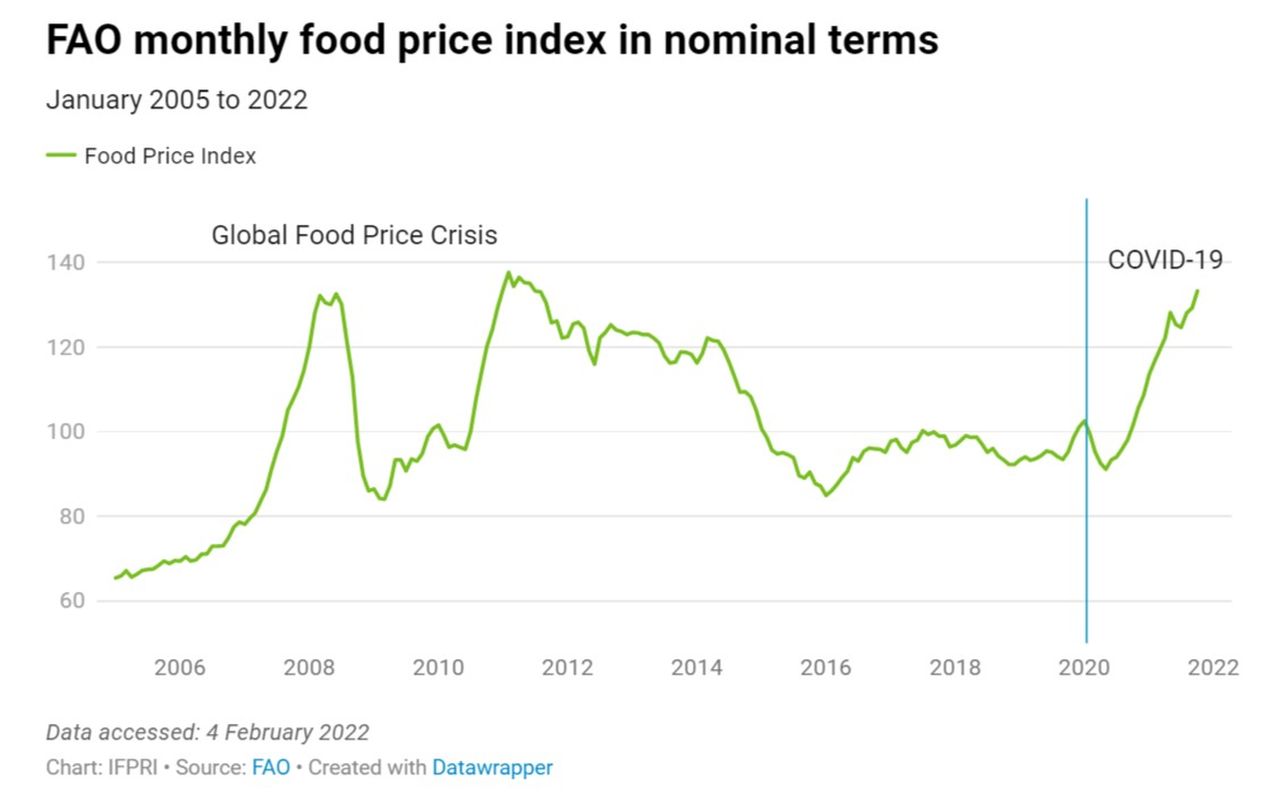
Taking a look at the data (as of February 11th 2022) what the current price hike means for world hunger and what can be done to prevent from another food crisis.
Until Easter 2022, GIZ publishes a new episode every fortnight introducing people who are committed to fair and sustainable cocoa in Côte d'Ivoire and Germany.
Stephanie Heiland, Project Manager at Sector Project Agriculture and part of this year’s Observer Delegation of the Deutsche Gesellschaft für Internationale Zusammenarbeit (GIZ) at COP27, shares her insights on the role of agriculture and food systems at the climate conference. Among other things, she reports from GIZ’s COP27 side event ‘Climate resilient agriculture and food systems in times of multiple crises and fragility’.
The Federal Ministry for Economic Cooperation and Development (BMZ) has released a video on the transformation of agricultural and food systems. In the video, Federal Minister Svenja Schulze also speaks about the urgent need to combat global hunger and contribute to resilient agricultural and food systems.
Experts from Burkina Faso, Cambodia, Ethiopia, India, Kenya and Malawi came together to discuss inclusive governance in a workshop entitled "Inclusive Governance of Food Systems Transformation". Daniel Montas, TMG Research, on the findings.
A Contribution by the Federal Ministry for Economic Cooperation and Development
At the network meeting "Partners for change - Transformation to a food secure, resilient and sustainable future", almost 250 participants from over 20 countries came together to exchange experiences and ideas on the transformation of agricultural and food systems. The final product, joint recommendations to transform agricultural and food systems, can now be read online.
Halfway through the 2030 Agenda, the BMZ invited participants to a network meeting entitled "Partners for change - Transformation to a food secure, resilient and sustainable future". Experts from around the world developed recommendations in a consultation process and then consolidated them in Berlin. A site visit.
The complex interrelationships of the sustainable transformation of agricultural and food systems are not always easy to understand - the Agri-Food Map, an interactive online app, makes the comprehensive relations accessible by providing a wide range of comprehensibly prepared information.
A Contribution by Harry Hoffmann (TMG) & Nathalie Demel (WHH)
At the halfway mark of the 2030 Agenda and two years after the UN Food System Summit 2021, a stocktaking moment was held in Rome to analyze the progress of countries on the commitments to action in transforming food systems. Dr Harry Hoffmann, TMG Think Tank, and Nathalie Demel, Welthungerhilfe, were on site and take stock as well.
The production of animal-source foods is becoming increasingly difficult due to the impact of climate change on the livestock sector in Africa. Though, Livestock make a crucial contribution to food security in Africa. Three papers by the Federal Ministry for Economic Cooperation and Development (BMZ), GIZ, ILRI and World Bank analyze, how Africas future livestock sector can look like.
How can rural economies become viable and modern? William Madudike, youth representative of the Zimbabwe Farmers Union (ZFU) and a potato farmer himself, examines this question. He argues that the whole rural economy and actors from producers to consumers need to be considered. An interview on the initiative role of youth.
In the midst of global climate discussions, a resounding call emerges: Women's land rights must be the cornerstone of our climate actions. They're not just pieces of the puzzle; they form the foundation for true climate resilience. TMG Think Tank for Sustainability reports from the first African Climate Summit.
In a world facing crises – from pandemics, armed conflicts, and climate change – how do we ensure everyone has enough food within planetary boundaries? A new podcast by Food4Transformation discover solutions talking to government officials, scientists, NGOs and farmers around the world.
Partnerships are needed to face the multiple shocks for food systems. This is what Dr. Jacqueline Mkindi, president of the Agriculture Council Tanzania (ACT) and CEO of the Tanzanian Horticulture Association (TAHA) states.
It takes the joint efforts of diverse actors to achieve a transformative impact on the global food system. Barbara Rehbinder, Scaling Up Nutrition Movement (SUN), discusses four people-centred principles to get closer to this goal.
Shu Wen Ng is a health economist. She knows what is best suited to go on a plate. But how can this be achieved on a mass scale in countries with lower incomes? "The solutions to gett there already exist," she says, "but what is often missing is courageous leadership to implement them."
Global food systems are confronted with multiple stresses. It is more urgent than ever to make them more resilient, healthier and more sustainable. A key tool in such a transformation is reforming agricultural policies and repurposing agricultural support, as discussed in an online seminar co-organised by the International Food Policy Research Institute (IFPRI).
This year's network meeting of the Partners for Change (P4C), a network of the German Federal Ministry for Economic Cooperation and Development (BMZ), took place in Nairobi, Kenya, on 26 and 27 June 2024. Kah Walla, moderator of the event and CEO of Strategies!, gives an insight into the key findings and learnings.
Africa’s largest youth generation has the potential to transform agriculture sustainably. Young entrepreneurs like Febelsa in Mozambique are building agricultural businesses that fuel local growth.
The bioeconomy movement is fundamentally changing agriculture and food production: through innovative ideas, environmentally friendly approaches and the realization that we need to work together globally to ensure that change truly benefits everyone. At this years’ German Forum for Food and Agriculture (GFFA), the German Federal Ministry for Economic Cooperation and Development (BMZ) focused on this topic.
In 2025, GIZ and the Import Promotion Desk (IPD) celebrate ten years of successful cooperation. With their joint stand at BIOFACH trade fair in Nuremberg, they were able to introduce over 300 organic companies of partner countries to the European market. And the journey continues – despite challenges on the global market.
In March, delegations from nine partner countries met in Berlin at the Partner Conference Scaling Access to Finance for Agripreneurs. Alongside AUDA-NEPAD, IFAD, BMZ, GIZ, and others, around 100 participants worked on practical solutions to support financial inclusion in agricultural transformation and hand over their conclusions to the AU's Kampala CAADP process.
The international soil conference ‘Partners for Change - SOILutions for a Food Secure, Resilient, and Sustainable Future’ brought together almost 150 different stakeholders in Berlin from 20 to 22 May. Its aim: to take stock of existing conservation programmes and pave the way for the future.
With a simple but effective idea to combat malnutrition: in Nairobi, Fabio Rappenecker and his start-up TenX Nutrition produce mandazi, which become a real power biscuit thanks to added micronutrients. The aim is to strengthen food security through local, affordable and healthy food.
A Conversation with Shakuntala Thilsted & Andreas Schaumayer
On the sidelines of the UN Ocean Conference (UNOC 2025), Andreas Schaumayer, Head of Division at the German Federal Ministry for Economic Cooperation and Development (BMZ), and Shakuntala Thilsted, Senior Nutrition Expert at CGIAR, discussed the crucial role of aquatic foods in nutrition, livelihoods, and climate resilience.
In May, this year's "Partners for Change – SOILutions for a Food Secure, Resilient, and Sustainable Future" conference took place. Kah Walla, Moderator of the Conference and Director of Strategies!, summarises the discussions and declares that healthy soils are not just the foundation of agriculture, but the cornerstone of a resilient, equitable, and climate-smart future.
As part of the “Let Me Tell You” series, children across Zambia are discovering fun stories that teach the importance of good food and healthy habits such as fish. Let’s dive into one of these tales together…
A Contribution by Global Donor Platform for Rural Development
The Global Donor Platform for Rural Development has recently published a new White Paper titled “Financing Agrifood Systems for People, Planet and Prosperity.” It outlines a practical agenda to unlock the capital, partnerships, and innovation required to drive change at scale.
Climate adaptation, youth empowerment, and food systems intersect with challenging social and political conditions. Lucky Andrianirina illustrates how young people in Madagascar navigate structural barriers, translate global agendas into local action, and understand agriculture as a space of agency and hope.
A focus on fragile contexts highlights development policy’s unique contribution to security policy and shows how the special initiative “Transformation of Agricultural and Food Systems“ itself needs to develop further. An article by Jes Weigelt, Head of Programmes at the TMG Think Tank for Sustainability.
At this year’s Partners for Change (P4C) Network Meeting in Berlin in June, participants from more than 40 countries came together to consolidate the outcomes of 18 months of collaboration across the network and develop a shared advocacy agenda for the transformation of agri-food systems. Discussions focused on messages around inclusion, governance, financing, evidence, and country-led implementation – and on how these can translate into concrete policy impact.
A contribution by Humboldt-Universität zu Berlin and TU Berlin
Alternative proteins could make an important contribution to future-proof food systems. Particularly in the Global South, they offer potential to conserve resources, strengthen food security, and enhance resilience to climate change.
Small holders around the world are often forced to sell their harvests below market value due to a lack of market and pricing information. A new app by the UN World Food Programme (WFP) is going to change this.
The project “Scaling digital agriculture innovations through start-ups” (SAIS) supports Africans going into business in the agricultural and food sector in scaling their digital innovations and thus reaching out to a larger number of users.
From a circular food system in Rwanda to functioning cooled transports in Kenya: The lab of tomorrow addresses development challenges such as preventing food loss and waste
Vertically growing plants, magnetic cotton. Hairy leftovers fertilizing fields, tractors running on algae? These six innovations could lead agriculture’s next Green Revolution!
Innovate2030 is looking for creative people from around the world to develop smart and innovative solutions against climate change in cities. Initiated by the Make IT-Alliance.
In March 2022, the virtual conference ICTforAg summons leading actors in the agrartechnology and food sector from low- and middle-income countries to exchange ideas advancing resilience, nutrition and agriculture-led growth.
At the ICTforAg conference in March 2022, the digital agriculture community exchanged on the challenges and opportunities associated with the next green revolution.
The finals of the Innovation Challenge “Advisory for Agroecology” took place on 17 May - 2022 featuring six innovations in advisory that provided the basis for a discussion on how to bridge the gap between science and practice.
Data security, financing, the automation of loans and the use of alternative data - the digitalisation of financial services in the agricultural sector has many facets, which an international conference with representatives of the agricultural finance sector in Zambia addressed. But how does the digitalisation of financial services contribute to rural development and the inclusion of women?
A new study on the digitalisation of agriculture puts farmers back at the centre of their own sector, identifies market gaps and gives recommendations on how to support relevant actors.
Four interviews kick off the relaunch under the new name „Food4Transformation“, asking the same questions from different perspectives. Mareike Haase and Stig Tanzmann from Brot für die Welt explain why the right to food, inclusivity, agroecology and food sovereignty are the central levers for a successful transformation.
Four interviews kick off the relaunch under the new name „Food4Transformation“, asking the same questions from different perspectives. Dr Julia Köhn, Chair of the German AgriFood Society, points out in the interview: Only if innovation and transformation are profitable in the medium term can they close the food gap in the long term.
Small farmers often have a hard time getting financing. An app in Nigeria wants to change that: Founder Blessing Mene about what his app offers - and about the opportunities and limitations of agricultural financing.
Journalists Angeline Ochieng and Victor Raballa visited Ms Bilha Munyole, a Kenyan farmer in Kimilili, Bungoma County, on her maize plantation. About the important role of mechanisation in climate-smart agriculture and in building resilience to the impacts of climate change.
A Campaign of the Federal Ministry for Economic Cooperation and Development
In light of World Food Day, the Federal Ministry for Economic Cooperation and Development launched a campaign: Three women from Kenya, Benin and Ecuador share how their ideas and local solutions are fighting hunger and poverty.
In Sub-Saharan Africa, not all financial institutions (FIs) have access to knowledge about how to implement processes to enhance rural financial inclusion. The pan-African Community of Practice (CoP) plays a pivotal role in supporting these institutions along this transformative journey.
How can agriculture engage more young people in rural areas? Advocacy and education campaigns can play an important role here. Simeon Kambalame, Timveni Child and Youth Media Organisation, has launched such a campaign in Malawi.
A Contribution by Initiative für nachhaltige Agrarlieferketten (INA)
The demand for sustainable products and supply chains is constantly increasing. DIASCA is an alliance that works on interoperability of digital solutions in agricultural supply chains through the development of open standards for forest monitoring, farm income and traceability.
Recycling organic waste into soil amendments and animal feed through a transdisciplinary approach – this is what the RUNRES project, launched in four sub-Saharan African countries four years ago, seeks to achieve. Three of the project's scientists report.
VR glasses are hardly a conventional tool in agriculture: for the past three years, they have been used in rural areas of Burkina Faso and Cameroon as a training tool for sustainable cotton cultivation.
As a passionate social scientist and entrepreneur from Malawi, Ngabaghila Chatata knows that she can overcome any challenge. Her story stands out in a country faced with high unemployment, particularly in its rural areas. As the managing director of Thanthwe Farms, she has set out to inspire the next generation of young agripreneurs – proving that successful business starts with the right mindset, not only capital.
Maura Oerding has a mission: With the specialty coffee Angelique's Finest, she not only wants to enter new markets but also revolutionize the coffee industry. Her recipe for success? Empowering women from Rwanda and Uganda from cultivation to marketing. Oerding’s goal: quality, fairness, and self-determination in every bean.
The results of twelve years of cooperation: a compendium by the Deutsche Gesellschaft für Internationale Zusammenarbeit (GIZ) takes stock of the work of green innovation centres in 16 countries. It brings together experiences, documents successes and challenges, and collects key findings for practical application and policy-making.
An Interview with Carolina Jaramillo Ferrer and Felix Strauss
How can sustainable solutions grow without losing sight of local realities? Carolina Jaramillo Ferrer (Uniban) and Felix Strauss (ALDI SOUTH Group) discuss what it takes to bring successful solutions to scale.
African countries still face huge gender gaps in terms of access to work and capital. What are the consequences of Corona for women in Africa? Jan Rübel interviewed Léa Rouanet on lockdowns and gender-based violence. The economist works at the Africa Gender Innovation Lab of the World Bank.
Small farmers in developing countries must modernise their farming methods, but poorly understood reforms could exacerbate poverty instead of alleviating it.
Happy youngsters in rural areas, green development and the connection to the digital age – professor Joachim von Braun believes in this future sceneraio for Africa. For three decades the agricultural scienties has been researching how politics can create prosperty on the continent.
Over a period of two years, the Ceres2030 team spent researching answers to the questions of how much it will how much it will cost to realize SDG 2 and where that money should be spent most effectively. IISD Senior Advisor and Ceres2030 Co-director Carin Smaller about small farmers, machine learning and women empowerment.
The Global Hunger Index (GHI) 2020 shows that the world is not on track to meet the international goal of “zero hunger by 2030”. If we continue at our current speed, around 37 countries will not even have reached a low hunger level by 2030.
The CGIAR agricultural research organization is systematically repositioning itself. We spoke with Juergen Voegele, Vice President for Sustainable Development at the World Bank, about progress to date - and discuss what needs to be done collectively to stop global hunger in ten years.
110 speakers from 120 countries met virtually at the Global Forum for Food and Agriculture (GFFA) to discuss the challenges to global food supply. They asked the question: How can food systems support the health of people and the planet?
In August, Germany’s development ministry set up a division concentrating on One Health topics. Parliamentary State Secretary Maria Flachsbarth on knowledge gaps at the human-animal-environmental interface, the link between One Health and food security, and lessons learnt from previous pandemics.
Startups are booming in African agriculture. What are the current trend and challenges – and can other regions benefit from innovative approaches? A Video-Interview with Claudia Makadristo, Regional Manager of Seedstars
International agricultural research is responding to new challenges: Their advisory group is undergoing a fundamental reform process and unites knowledge, partnerships and physical assets into OneCGIAR.
From the lab to the masses: Maria Andrade bred varieties of biofortified sweet potatoes which are now widely used all over the continent. She sets her hope on the transformation of African agriculture.
A contribution by Heike Baumüller, Christine Husmann, Julia Machovsky-Smid, Oliver Kirui, Justice Tambo
Any initiative whose aim is to reduce poverty in Africa should focus first on agriculture. But what kind of investment has the greatest impact? The use of scientific criteria provides some answers.
The lockdown due to COVID-19 hit the economy hard - including agriculture in particular with its supply chains and sales markets. What creative coping strategies have those affected found? The Seminar for Rural Development has begun a research study on th
Freshwater deficits are affecting more and more people throughout the world. In order to counter this, our global food system will have to change, our author maintains. A case for more research on alternative crops and smart water solutions.
Joe DeVries is a breeder – and Vice President of AGRA (Alliance for a Green Revolution in Africa). What are the chances and risks of a ’green revolution‘ in Africa? A discourse between Jan Rübel and him about productivity, needs, and paternalism.
A conversation with aquatic researcher Shakuntala Thilsted on the long-neglected nutrition benefits of aquatic diets and the empowering qualities of a sustainable aqua-food systems transformation.
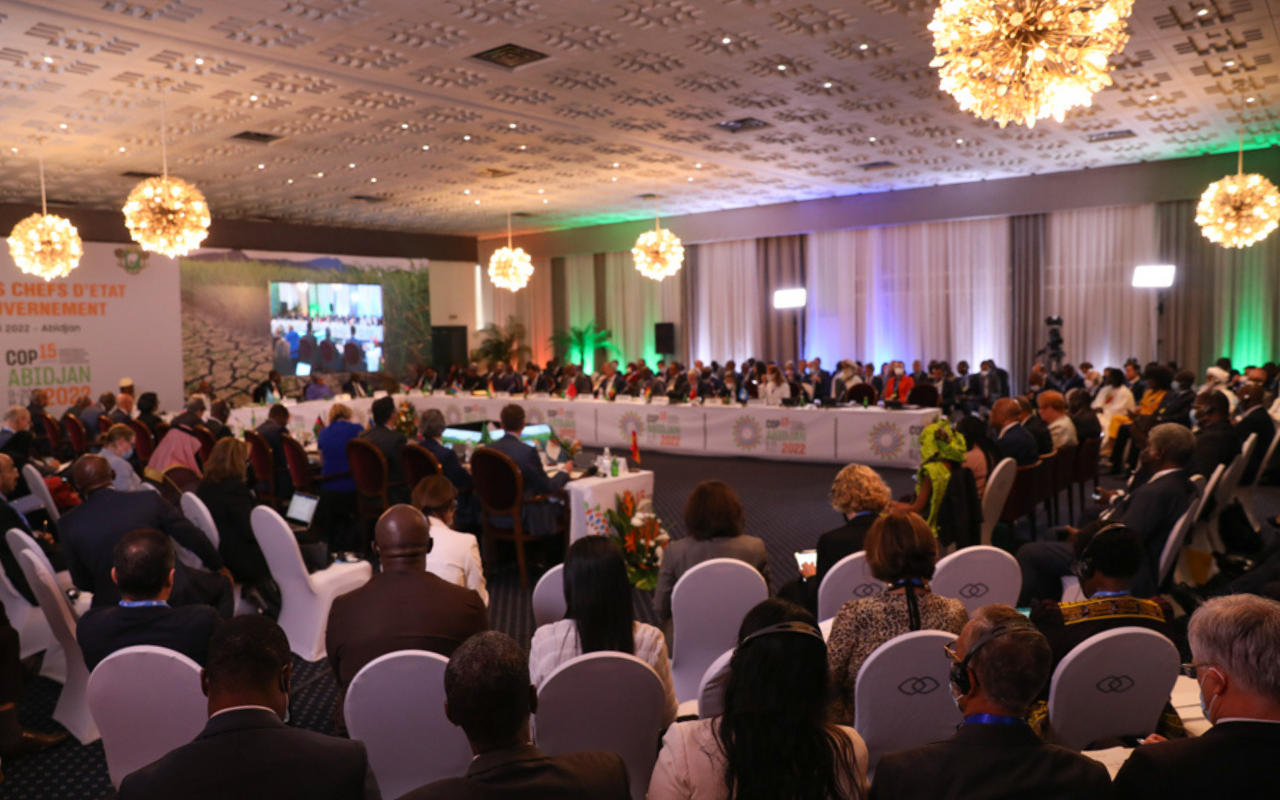
At the UNCCD COP15, the Töpfer Müller Gaßner Think Tank (TMG) hosted four side events. The agenda of the kick-off event included discussions for the Human Rights and Land Navigator.
A Contribution by Adrian Muller, Catherine Pfeifer and Jürn Sanders (FiBL)
Taking Biodiversity Focus Areas under production or abandoning lower yielding, more extensive production systems is the wrong approach to mastering the looming global food crisis, say the authors of the Research Institute of Organic Agriculture (FiBL).
New insights on trade and value addition in the rice sector in West Africa
Low import tariffs, smuggling activities, unpredictable tax exemptions and weak enforcement of food safety standards: The potential of local rice value chains is undermined in West African countries.
The Corona pandemic is hitting economies around the world very hard - but developments in African countries are quite diverse. There are different speeds, resiliences and vulnerabilities. What are the reasons for this? Apl. Prof. Jann Lay of the GIGA Institute provides answers.
Interview with Caroline Milow and Ramon Brentführer
Groundwater resources remain dormant in the soil of African regions. Where does it make sense to use them – and where does overexploitation of nature begin? Caroline Milow (GIZ) and Ramon Brentführer (BGR) talk about potentials in the future and lessons from the past.
Agriculture is coming under pressure worldwide: bacteria, viruses and insects are causing problems for crops. In Palestine, Dr. Rana Samara from the Palestinian Academy of Science and Technology is researching solutions to the problem. And she finds them in nature itself.
We use cookies on our website. Some of them are essential, while others help to improve your user experience. Your consent is voluntary and can be revoked at any time on the "Privacy" page.
Protects against cross-site request forgery attacks
Retention period: This cookie remains only for the current browser session.
Saves the current PHP session.
Retention period: This cookie remains only for the current browser session.
Content from third-party providers, such as YouTube, which collect data about usage. Third-party content embedded on this website will only be displayed to you if you expressly agree to this here.
Provider: Google Ireland Ltd., Gordon House, Barrow Street, Dublin 4, Ireland
Retention period: Here you can learn more about the storage period of the cookie: https://policies.google.com/privacy.
Provider: Vimeo, Inc. / 555 West 18th Street New York, New York 10011, USA
Retention period: Here you can learn more about the storage period of the cookie: https://vimeo.com/privacy.
We use Matomo analytics software, which collects anonymous data about website usage and functionality to improve our website and user experience.