Stepping into the future: How youth organisations are driving change

Together they are stronger: In many African countries, young men and women are coming together to form youth organisations. These organisations help young people in rural areas to earn a living in the agricultural and food sector, creating prospects for the future in rural areas.

Dialogue formats provide opportunities for young people to actively participate in policy discussions and to present their views. © GIZ/ Homeline Media

By Felix Chiyenda

Felix Chiyenda is a Programme Officer for Youth Participation and Economic Empowerment at the National Youth Council of Malawi (NYCOM), a statutory body of the Republic of Malawi established in 1996 by the National Youth Council of Malawi Act.

All contributions

By Deutsche Gesellschaft für Internationale Zusammenarbeit (GIZ)

The Deutsche Gesellschaft für Internationale Zusammenarbeit (GIZ) is a globally active provider of international cooperation for sustainable development. It has more than 50 years of experience in a wide range of fields.  

All contributions

Members of youth organisations work together to develop new, in-demand occupations and business ideas, such as fitters for solar irrigation systems in Malawi, sellers of local grilled chicken from mobile street stalls in Kenya, or suppliers of organic compost made from industrial mango waste in Burkina Faso.  


Ich bin ein Alternativtext
© GIZ/ Homeline Media

Youth organisations often act as catalysts for their members' successful agribusinesses. They provide support services to strengthen their agribusinesses and motivate young people to think and act innovatively.


The National Youth Council of Malawi has provided training to 43 youth clubs in Mchinji, Ntchisi and Mzimba districts to strengthen their institutional capacity and improve support services to their members. These trainings focus, among other things, on the different agricultural value chains along which the youth clubs operate


says Felix Chiyenda, Programme Officer of the National Youth Council of Malawi.


Other youth organisations, for example, carry out market analyses, provide training in developing innovative business ideas and mentoring programmes, act as a platform for savings and credit services, or raise awareness of social issues such as gender equality and women's empowerment. In this way, they not only strengthen the agri-food sector, but also provide their members with attractive and livelihood-enhancing jobs.


We want to support the youth clubs by showing them opportunities and networking them with other actors. This is also in line with the national development strategy 'Malawi 2063', which focuses on youth. This is the basis for unlocking the huge potential for youth employment and self-employment in Malawi's agri-food sector

says Felix Chiyenda.


A supported youth organisation has launched a pioneering project focusing on community farming and cooperation. By building a warehouse and sharing farm space, they are enabling their members to pool their resources and market high quality groundnut and soya beans, as well as vegetables and poultry as a group. This collaborative approach helps to produce market-relevant quantities and to meet the demands of large buyers reliably and at the time they are needed.


In Western Kenya, several youth organisations are dedicated to the professional production of passion fruit seedlings. Not only do they provide a valuable service within the value chain, but they also act as intermediaries to connect young people with internships and professional contacts in companies. At the same time, they help their members with access to finance.  
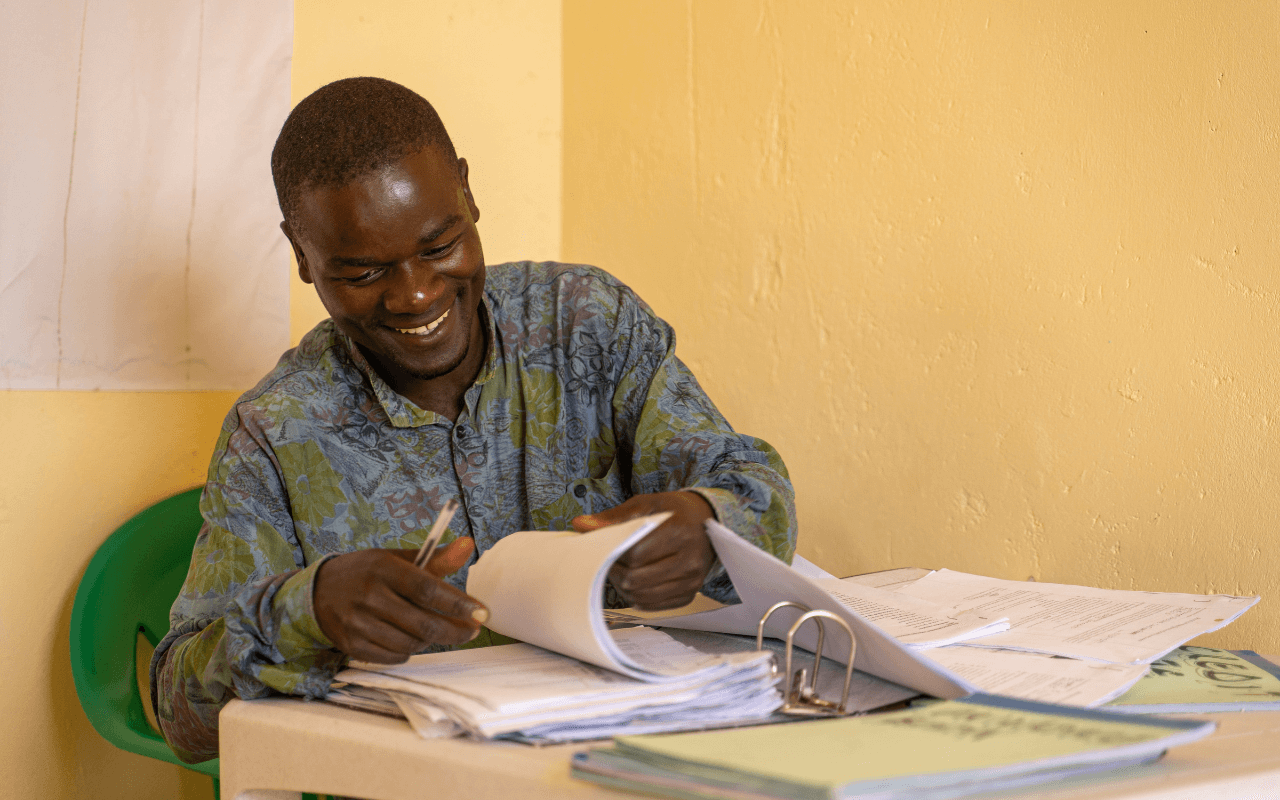
 

Ich bin ein Alternativtext
© GIZ/ Homeline Media

In addition to these economic activities, youth organisations also play an important role in lobbying. For example, they bring the needs and concerns of young people into political planning processes. This ensures that young people's interests are heard at the political level. Dialogue formats also provide opportunities for young people to actively participate in policy discussions and to present their views. In Malawi, the National Youth Council was established for this purpose. The aim of this institution is to promote the voice and economic participation of young people and youth organisations. This holistic approach enables youth organisations to stimulate sustainable change and positively shape the future of young people in Africa.  


International Youth Day (12th Ausgust) provides a special opportunity to highlight the importance of youth organisations for sustainable change in rural areas. It also helps organisations to exchange ideas with like-minded people in order to successfully shape this change.  


Do you want to know more about what youth organisations from Burkina Faso, Kenya, Malawi, and Mozambique learned from each other and what they plan to do differently? Here you can find impressions and information about the exchange of youth organisations in Africa.

For more information on youth employment in rural areas, click here:
Rural Employment - SNRD Africa
Promoting employment for young people in rural areas


Similar articles

A farmer waters crops in a lush field, showcasing sustainable agricultural practices under clear blue skies.

Youth as key actors for a transformation of agri-food systems

Five Questions for Anke Oppermann

In October, the Committee on World Food Security (CFS) adopted policy recommendations ‘Promoting Youth Engagement and Employment in Agriculture and Food Systems’. Anke Oppermann answers five questions on youth employment in the agricultural sector.

Read more

A group of children with backpacks attentively listen to a woman explaining the chocolate-making process at an educational fair.

When sustainability becomes part of the curriculum

A contribution by Jan Rübel

During the trade Grüne Woche, school classes visited the BMZ (German Federal Ministry for Economic Cooperation and Development), Brot für die Welt and Misereor. Each class spends one hour at their stand to learn about the global challenges posed by food systems. A review by Jan Rübel.

Read more

Vibrant Abidjan market scene with vendors balancing colorful fruits on their heads, creating a lively atmosphere. | © GIZ Toni-Kaatz-Dubberke

Young farmers as custodians of transformation

An Interview with William Madudike

How can rural economies become viable and modern? William Madudike, youth representative of the Zimbabwe Farmers Union (ZFU) and a potato farmer himself, examines this question. He argues that the whole rural economy and actors from producers to consumers need to be considered. An interview on the initiative role of youth.

Read more

Children sort fish on the ground while a woman carries a blue bucket on her head in a lush outdoor setting. | © F4F GIZ Zambia

Let Me Tell You: How Zambia Uses Comics and Animation to Inspire Healthy Eating

By Jana Anouk Mansour

As part of the “Let Me Tell You” series, children across Zambia are discovering fun stories that teach the importance of good food and healthy habits such as fish. Let’s dive into one of these tales together…

Read more

Stephan Exo-Kreischer ist Deutschland-Direktor der Lobby- und Kampagnenorganisation ONE.

New campaign for women: "Poverty is sexist"

Interview with Stephan Exo-Kreischer

This is a benchmark for everybody: More rights for women are a very influencing solution in the struggle against extreme poverty and hunger worldwide, says Stephan Exo-Kreischer, Director of ONE Germany. The organisation specialises in political campaigning as a lever for sustainable change.

Read more

Is the international community still on track in the fight against hunger?

Interview with Miriam Wiemers (Welthungerhilfe)

The Global Hunger Index (GHI) 2020 shows that the world is not on track to meet the international goal of “zero hunger by 2030”. If we continue at our current speed, around 37 countries will not even have reached a low hunger level by 2030.

Read more

Teilnehmer einer Schulung im Digital Transformation Center Kigali, Ruanda. © Mali Lazell, GIZ

Africa's rapid economic transformation

A report by T. S. Jayne, A. Adelaja and R. Mkandawire

Thirty years ago, Africa was synonymous with war, famine and poverty. That narrative is clearly outdated. African living standards are rising remarkably fast. Our authors are convinced that improving education and entrepreneurship will ensure irreversible progress in the region even as it confronts COVID-19.

Read more

A diverse group attentively listens to two men explaining equipment at an event in Burkina Faso.

The farmes themselves are the benchmark

A contribution by Andreas Quiring

Strong farmes are the key to a self-determined, sustainable development. Social innovations can help make the farmers’ actual needs the benchmark.

Read more

A hand carefully opens a ripe cocoa pod, revealing the seeds inside against a backdrop of more pods.

Doing More With Less

A contribution by Jochen Moninger

Innovation is the only way to end hunger worldwide by the deadline we have set ourselves. The secret lies in networking and sharing ideas – and several initiatives are already leading by example.

Read more

A supermarket receipt design displays "SUPERMARKT-CHECK 2020" with logos, focusing on retail evaluation.

Supermarket Scorecard on Human Rights

A contribution by Dr. Franziska Humbert (Oxfam)

Oxfam’s supermarket scorecard, which is in its third year, shows one thing in particular - it works! Supermarkets can change their business policies and focus more on the rights of those people around the world who plant and harvest food. However, this does not happen without pressure. 

Read more

(c) TMG-SEWOH
Zwei Landwirte führen ein während der COVID-19-Pandemie ein Videotagebuch mit ihren persönlichen Erfahrungen in Umgang mit Corona.

Video diaries in the days of Corona: Voices from the ground

A contribution by Sarah D´haen & Alexander Müller, Louisa Nelle, Bruno St. Jaques, Sarah Kirangu-Wissler and Matteo Lattanzi (TMG)

Young farmers’ insights on the effects of the COVID-19 pandemic on food systems in Sub-Saharan Africa @CovidFoodFuture and video diaries from Nairobi’s informal settlements.

Read more

A woman smiles while carrying a basket of plants in a lush garden, surrounded by vibrant greenery and trees.

The hype about urban gardening: farmers or hobby gardeners?

A contribution by Stig Tanzmann

Urban gardening is becoming increasingly popular in northern metropoles. People who consider themselves part of a green movement are establishing productive gardens in the city, for example on rooftops or in vacant lots. In severely impoverished regions of the global South, urban agriculture is a component of the food strategy.

Read more

(c) Christoph Püschner/Zeitenspiegel
Republik Niger, Kollo: die Werbetafel einer NGO soll helfen, dass in der nigerianischen Gesellschaft das Thema Familienplanung populär wird.

A new U.S. Africa policy?

An article by Jan Rübel

After four years of Donald Trump in the White House, it is time to take stock: What policies did the Republican government pursue in African regions? And what will change in favor of Joe Biden after the election decision? Here is an evaluation.


Read more

(c) Christoph Püschner/Diakonie Katastrophenhilfe
Republik Niger / Kollo, Nov. 2017: Müttern haben sich für den Vortrag "richtige Ernährung für Kinder" der NGO Kundji Fondo im Dorfzentrum versammelt.

Good health is impossible without healthy food

A contribution by Heino von Meyer

Corona makes it even more difficult to achieve a world without hunger by 2030. So that this perspective does not get out of sight, Germany must play a stronger role internationally - a summary of the Strategic Advisory Group of SEWOH.

Read more

Farmers operate a blue and red tractor tilling dry soil in a dusty field under clear skies.

Continent in an uptrend

A report by Dr. Agnes Kalibata (AGRA)

Partnering for Africa’s Century: Innovation and Leadership as Drivers of Growth and Productivity in Rural Areas

Read more

A worker in a yellow shirt tends to a lush palm oil plantation, surrounded by tall trees under a bright sky.

No rainforest for our consumption

A contribution by Jenny Walther-Thoß (WWF)

In the tropics rainforests are still being felled for the production of palm oil, meat and furniture. It is high time to act. Proposals are on the table.

Read more

A man in a cap and blazer speaks at a podium during a presentation on small business competition winners.

How do you campaign “Food Systems”?

Interview with Paul Newnham, Director of the SDG 2 Advocacy Hub.

The UN Food Systems pre-Summit in Rome dealt with transforming the ways of our nutrition. How do you bring that to a broad public? Questions to Paul Newnham, the Director of the Sustainable Development Goal (SDG) 2 Advocacy Hub.

Read more

The image promotes a counter-mobilization event to transform corporate food systems, scheduled for July 25-28, 2021.

Mr. Marí, what happened at the alternative summit?

An Interview with Francisco Marí (Brot für die Welt)

Brot für die Welt (Bread for the World) did not attend the UNFSS pre-summit. Instead, the organisation took part in a counter-summit that took place at the same time. A conversation with Francisco Marí about the reasons, the process - and an outlook for the future

Read more

Women joyfully sell tomatoes and vegetables at a vibrant market stall, highlighted by a striking red and blue overlay.

How can the private sector prevent food loss and waste?

An interview with David Brand (GIZ)

From a circular food system in Rwanda to functioning cooled transports in Kenya: The lab of tomorrow addresses development challenges such as preventing food loss and waste

Read more

A person harvests plants next to a branded sack in a field, emphasizing sustainable farming practices.

From lost products to safe food - Innovations from Zambia

A contribution by GIZ

In Zambia, innovative approaches are used to address the problem of post-harvest losses in the groundnut value chain. GIZ's Rapid Loss Appraisal Tool (RLAT) can help to develop more such approaches.

Read more

Hands arrange multiple circular molds filled with batter, creating a pattern of preparation and culinary artistry.

A Climate of Hunger: How the Climate Crisis Fuels the Hunger

A photo reportage by the Zeitenspiegel agency

Every one degree Celsius rise in temperature increases the risk of conflict by two to ten percent. The climate crisis is a humanitarian crisis, as the photos by Christoph Püschner and Frank Schultze illustrate.

Read more

A group of protesters in Stockholm holds climate change signs during a Fridays for Future event in a sunny park.

‘None of the Three Traffic Light Coalition Parties is Close to the Paris Agreement’

An Interview with Leonie Bremer (FFF)

At the climate conference in Glasgow, activists from various groups protested again – Leonie Bremer from ‘Fridays for Future’ was there too. How can climate protection and development cooperation work hand in hand?

Read more

Illustrations accompany the text "Five tips to reduce food waste" with various food-related icons.

Five tips to reduce food waste

A listicle against food waste

Whether it's banana bread made from brown bananas, conscious shopping plans or foodsharing, we give you five tips on how to reduce your everyday food waste.

Read more

A modern, angular building with geometric windows stands beside flags at the LCOY event, surrounded by autumn trees.

Social justice and climate justice: Fair Vibe at the Youth Climate Conference

At LCOY Germany, the local youth climate conference, views on climate protection from all political spectrums are discussed. The Fairactivists, a programme of Fairtrade Germany, participated with a panel discussion on the link between social justice and climate justice.

Read more

Handmade signs advertising various services like electrician and hairdresser are attached to a tree trunk.

Mozambique: How informal workers find jobs through an app

A Contribution by Leonie March

There are only about 1 million jobs in the East African country. The majority of the population works in the informal sector, and it can be difficult for them to find customers. Biscate offers a digital solution - without the need for internet, data or smartphones.

Read more

A woman in a red blazer speaks confidently in a modern conference room setting.

Podcast: Fighting world hunger together

Chancellor Angela Merkel in the Podcast of the Federal Government

At the start of World Food Week around World Food Day on 16 October, Chancellor Angela Merkel stressed that the fight against global hunger will only be successful with international responsibility and solidarity (german only).

Read more

A person in a yellow shirt holds a tray of eggs, smiling inside a chicken coop filled with hens.

Cultivating tomorrow

A Contribution by GIZ

Africa’s largest youth generation has the potential to transform agriculture sustainably. Young entrepreneurs like Febelsa in Mozambique are building agricultural businesses that fuel local growth.

Read more

A woman at a trade show proudly displays organic food products in front of a booth showcasing diverse packaged goods.

BIOFACH as a game changer for organic producers

A Contribution by Claudia Jordan

In 2025, GIZ and the Import Promotion Desk (IPD) celebrate ten years of successful cooperation. With their joint stand at BIOFACH trade fair in Nuremberg, they were able to introduce over 300 organic companies of partner countries to the European market. And the journey continues – despite challenges on the global market.

Read more

A smiling woman in a polka dot dress holds a baby, embodying change and joy in a lush outdoor setting.

Women as Change Agents

A conversation with Caroline Kayanja, Dr. Eileen Nchanji, & Theresa Herbold

A transformation of agricultural and food systems is not possible without overcoming structural gender inequalities. In this discussion, Caroline Kayanja (UCOBAC), Dr Eileen Nchanji (CIAT) and Theresa Herbold (Ministry of Development) reflect on the key challenges and solutions – from land access and representation to women-led collectives and innovative technologies.

Read more

A man wearing traditional attire and a purple hat stands outdoors in front of trees and a building.

"We have high expectations of the Kampala Declaration"

An Interview with Lawani Arouna

The rural population and vulnerable groups should be involved in the implementation of the African Union's Kampala Declaration on the transformation of agricultural and food systems. This is the demand of sociologist Lawani Arouna, Vice President of the Regional umbrella organisation of farmers' associations in West Africa (ROPPA).

Read more

A portable radio with an extended antenna sits on freshly cut grass in a field. | © GIZ Ursula Meissner

Twelve countries, two podcasts, one goal 

A Contribution by GIZ

Two new podcast formats from the Deutsche Gesellschaft für Internationale Zusammenarbeit (GIZ) bring stories from on-the-ground project work to life: "Over to you!" from Malawi and "Voices of Change – Beneficiary Story Book" from Zambia. At the heart of these podcasts are the people behind the changes toward sustainable food security.

Read more

Text highlights the potential of 71 million young people to enhance rural areas, with footprints symbolizing progress.

Answers from the youth: "Leave or stay? That depends on it!"

GIZ study; conducted by Geopoll

Does Africa's youth want to live in the city or in the country? Which career path seems particularly attractive? And how optimistic are the young people about the future? Young adults from rural areas answered these questions by SMS.

Read more

A group of people work together in a lush vegetable field under a clear blue sky.

"Agriculture can become a job engine"

Interview with Reiner Klingholz

How can agriculture modernise Africa? And does the road to the cities really lead out of poverty? Dr. Reiner Klingholz from the Berlin Institute for Population and Development in conversation with Jan Rübel .

Read more

Two women in vibrant traditional attire walk joyfully down a street, surrounded by smiling children.

Enough of being poor

By Marcellin Boguy

In western Africa a new middle class is emerging. Their consumer behaviour is determining the demand for products – home-produced and imported goods, on the internet or at the village market. The people of Ivory Coast in particular are looking to the future with optimism.

Read more

A person in a suit speaks into a microphone, holding papers, with an attentive audience in the background at a Rural Future Lab event.

The Big Bang is possible

Interview with Joachim von Braun

Happy youngsters in rural areas, green development and the connection to the digital age – professor Joachim von Braun believes in this future sceneraio for Africa. For three decades the agricultural scienties has been researching how politics can create prosperty on the continent. 

Read more

A person with curly hair is partially obscured by a large play button icon, suggesting a video is ready to be played.

Video: 4 Questions to Claudia Makdristo

A video clip by Seedstars

Startups are booming in African agriculture. What are the current trend and challenges – and can other regions benefit from innovative approaches? A Video-Interview with Claudia Makadristo, Regional Manager of Seedstars  

Read more

A smiling woman in a green shirt uses her phone while standing in a cornfield.

An opportunity for the continent

A contribution by the Bill & Melinda Gates Foundation

Africa’s population is young and ready to take its destiny into its own hands. Agriculture offers amazing opportunities in this regard. The Bill & Melinda Gates Foundation wants to support the next generation in this way.

Read more

Farmers work together threshing rice in a field with a makeshift machine under the clear sky.

Leveraging investment impacts

A contribution by Heike Baumüller, Christine Husmann, Julia Machovsky-Smid, Oliver Kirui, Justice Tambo

Any initiative whose aim is to reduce poverty in Africa should focus first on agriculture. But what kind of investment has the greatest impact? The use of scientific criteria provides some answers.

Read more

Vibrant scene in Abidjan market with vendors balancing colorful fruits and vegetables on trays amid bustling crowds.
Food market in Abidjan. © GIZ

Reference values: A building block on the road to social equality

A contribution by Friederieke Martin (GIZ)

A quick and cost-effective method calculates living wages and incomes for many different countries. The GIZ together with Fairtrade International and Richard and Martha Anker have developed a tool that companies can use to easily analyse income and wage gaps.

Read more

A gloved hand carefully inspects rows of neatly arranged chocolate bars on a production line.

From start to finish: a vision of interconnectivity

A contribution by Tanja Reith

At the moment, the agricultural industries of African countries exist in relative isolation. Imagine peasant farmers digitally connected to the value chains of the global food industry. How could this happen? A guidebook.

Read more

A speech bubble asks about taking over a farm, featuring emojis of a chick, potato, cow, rice bowl, and tractor.

The Life of Their Dreams - What Children Want

Interview with Gnininkaboka Dabiré and Innocent Somé

Later on you want to become a farmer yourself, or would you prefer to take up another profession? Two young people from Burkina-Faso talked to representatives of the Dreyer Foundation about their parents' farms, the profession of farmer and their own plans for the future.

Read more

People gather around a bowl holding a package of soy powder, discussing the product information on labels.

"Soy can be made into more than just flour"

A report by Johanna Steinkühler (GIZ)

The soybean is a natural crop that can be used to make a lot of food. So, Tata Bi started a small processing business first on her own, then with a few other women, which provides the women with an additional source of income year-round besides selling the soybeans.

Read more

A smiling woman wearing a colorful headscarf stands in a sunlit field, exuding joy and confidence.

Africa's face of agriculture is female

A contribution by Beatrice Gakuba (AWAN-AFRIKA)

Africa has a huge opportunity to make agriculture its economic driver. However, the potential for this is far from being made exhaustive use of, one reason being that women face considerable difficulties in their economic activities. The organisation AWAN Afrika seeks to change this state of affairs.

Read more

A man with a rifle stands before a crowd holding pots, illustrating a tense situation at a distribution point.

"Without peace, there will be no development"

Interview with Karina Mroß (DIE)

What contribution does development cooperation make to conflict prevention? What can it do for sustainable peace? Political scientist Karina Mroß talks to Raphael Thelen about post-conflict societies and their chances for peaceful development.

Read more

A person speaks passionately at a podium during a presentation at the Ministry for Economic Cooperation and Development.

The communicator

A contribution by Jan Rübel

What do electrical engineering, telecommunications and agriculture have in common? They arouse the passion of Strive Masiyiwa: Thirty years ago, he started an electrical installation company with $75, later riding the telecommunications wave as a pioneer. Today he is committed to transforming African agriculture.

Read more

A man in a suit gestures expressively during a conversation, with green plants in the background.

Spiritual mortar for the young generation

A contribution by Jan Rübel

Fred Swaniker is working building a new era of leaders. And what about agriculture? ‘It needs to be more sexy!’

Read more

A pile of raw cashew nuts with one split open to reveal the creamy interior, highlighting their natural texture.

The 'Grey Gold'

A contribution by Maria Schmidt (GIZ)

The Cashew Council is the first international organisation for a raw material stemming from Africa. The industry promises to make progress in processing and refining cashew nuts - and answers to climate change

Read more

A man conducts a workshop, engaging an attentive group seated in a classroom setting.

A new attempt at Africa's industrialization?

A contribution by Helmut Asche

Afrika is about ready. There are promising approaches for a sustainable industrialization. However, the path poses challenges to the continent.

Read more

In Haute Matsiatra, two fish farmers work with nets in a rice paddy, while another sits on a rock overlooking the fields.

Sustainable Artisanal Fisheries and Aquaculture in Rural Areas

Fish is important for combating malnutrition and undernourishment. But it is not only notable for its nutritional value, but also secures the livelihoods and employment for 600 million people worldwide.

A Project of GIZ

Read more

A person in a denim jacket stands in a lush banana plantation, holding a bunch of green bananas.

Youth Employment in Rural Areas

The world’s population keeps on growing; with this rise comes an increased need for food as well as productive employment opportunities. Offering young people in rural areas better employment prospects is one of the objectives of the sector project. The young population is the key to a modern and efficient agricultural economy.

A project of GIZ

Read more

A woman in glasses and a patterned coat gestures while engaging in conversation at a social gathering.

Priscilla Impraim and her chocolate business

A contribution by Jan Rübel

Priscilla Impraim is one of the first women in Ghana to enter the chocolate business. Despite some hurdles, she founded the company Ab Ovo Confectionery Limited in 2006 with currently six permanent employees and 25 seasonal employees.

Read more

A person in colorful clothing gathers fluffy cotton into a large sack under a clear blue sky.

Achieving more together – New forms of cooperation for sustainability in the cotton sector

A Contribution by Saskia Widenhorn

Saskia Widenhorn, Head of the Cotton Component in Cameroon and the Sub-Saharan Cotton Initiative at GIZ, reports on the Bremer Cotton Week, which brought together international industry experts. The agenda included supply chain transparency, sustainability and new forms of cooperation between the private sector and partner countries.


Read more

A woman in a vibrant pink dress tends to young rice plants in a lush, green paddy field.

Why organic is a „blessed” method

An Interview by Claudia Jordan

Three female entrepreneurs from Mozambique, Sri Lanka and Uganda tell their stories about starting organic businesses from scratch, now selling Baobab Oil, Gotukola powder and Shea butter in international markets. And they explain why their business is almost 100 percent female.

Read more

A group of people walks through a field in Tanzania, with vibrant sunflowers blooming under a clear sky.

Sang'alo Institute invests in farming of sunflower crop

A contribution by James Wanzala

Kenya is a large importer of vetable oils mainly from Indonesia and Malaysia - amongst them sunflower oil. Due to the Russian war of aggression against Ukraine, there were supply bottlenecks and food shortages, leading to less affordable vegetable oils in Kenya. As a response to the lack of supply, the Sanga'alo Institute of Science and Technology, took that impulse, teamed up with the GIZ and established regional cultivation and refinement of sunflowers.

Read more

A group of people stands in line outdoors, waiting at a registration table under a tree.

The Principle of Sharing

A contribution by gebana

gebana, a Swiss fair trade company, follows the principle of "sharing" with its corporate philosophy: farming families in the Global South participate directly in the sales of their online shop. Caroline Schaar, Marketing at gebana, explains the company's approach.

Read more

A woman in a pink headscarf and floral dress stands confidently in a lush garden. | © Claudia Jordan

Stick together and learn from each other

By Claudia Jordan

During the Women Leadership Programme in May 2024, around 20 women from African countries and Germany met again for a one-week workshop in Bavaria, Germany to become fit for leadership in their organisations. One topic that concerns the women across countries is climate change, but also violence against women and their discrimination in agriculture.

Read more

A woman in a red headscarf observes young plants growing in a greenhouse, tending to them carefully.

Uprooting the Norm

A Contribution by GIZ

As a passionate social scientist and entrepreneur from Malawi, Ngabaghila Chatata knows that she can overcome any challenge. Her story stands out in a country faced with high unemployment, particularly in its rural areas. As the managing director of Thanthwe Farms, she has set out to inspire the next generation of young agripreneurs – proving that successful business starts with the right mindset, not only capital.


Read more

A diverse group of women in casual attire smiles together outdoors, celebrating unity and community spirit.

Where Goats Listen to the Radio

A Contribution by GIZ

German and Ugandan women farmers come together in Mecklenburg-Vorpommern to exchange experiences – from modern milking systems to the challenges of women's participation in agricultural decision-making. Amid goats, lavender ice cream, and engaging discussions, one thing becomes clear: women can achieve great things together, across borders and generations.

Read more

A person tends to drying coffee beans on raised beds under a bright blue sky in a lush rural setting.

Improving The World, Sip by Sip

A Conversation with Maura Oerding

Maura Oerding has a mission: With the specialty coffee Angelique's Finest, she not only wants to enter new markets but also revolutionize the coffee industry. Her recipe for success? Empowering women from Rwanda and Uganda from cultivation to marketing. Oerding’s goal: quality, fairness, and self-determination in every bean.

Read more

A diverse group of women joyfully pose together on a rooftop, celebrating female leadership and empowerment.

Female Leadership: A Key Lever for Transformation?

A Conversation with Carmen Torres Ledezma & Oluwaseyi Kehinde-Peters

Female Leadership is vital to the transformation of agriculture and food systems. Therefore, it is so important to advance gender-sensitive approaches to increase the presence of women in leadership positions in agricultural production and to make these systems more equitable, sustainable and resilient.

Read more

A woman in a blue sari arranges white silk cocoons on a woven wall in a rural setting.

Gender-Transformative Approaches – Unlocking Everyone’s Potential

A Contribution by GIZ

Studies show that women often manage agricultural resources more effectively and sustainably. With equal access to production resources, agricultural yields could increase by up tp 30 per cent. But this is about more than just productivity. How can gender-transformative approaches (GTA) drive meaningful change and why are GTA key to sustainable change?

Read more

Illustrated icons highlight six collaborations aimed at creating fair and sustainable supply chains.

Stronger toghether: Six collaborations for fair agricultural supply chains

A Listicle by Yvonne Bielfeld

For everyone in the supply chain to benefit, it is essential that politics and business work together. The measurable successes of such partnerships are demonstrated by the following six projects: they show how cooperation with the business sector can make supply chains fairer, more resilient, and more sustainable step by step.

Read more

A woman smiles confidently inside her small shop, surrounded by various goods, symbolizing economic equality and care.

The Gap the Economy cannot afford

A Study by CARE

In a new study, the international humanitarian agency CARE analyses how the economic and social barriers faced by women significantly reduces the global gross domestic product (GDP). At the current rate, it will take 152 years to close the economic gap between women and men – although closing this gap would be extremely profitable from an economic perspective.

Read more

A group of women stands smiling on a lawn in Herrsching am Ammersee, surrounded by lush greenery and a building.

"We want to change the narrative of rural women"

A Contribution by GIZ

Development cooperation doesn't resonate in Germany? The Bavarian rural women have a different story to tell. A visit to a training session with female smallholder farmers from Kenya, Zambia and Uganda in Bavarian Herrsching am Ammersee.

Read more

A man collects natural rubber from a tree, holding a container and tapping tool in a lush forest. | © GIZ

From the Tree to the Street: The Story of Natural Rubber

A Contribution by Carlos Castellanos & Yvonne Bielfeld

The shoe manufacturer Cueros Vélez as a good example of private sector responsibility: the photo gallery shows how the bark of the rubber tree becomes a reliable yet deforestation free companion on our roads.

Read more