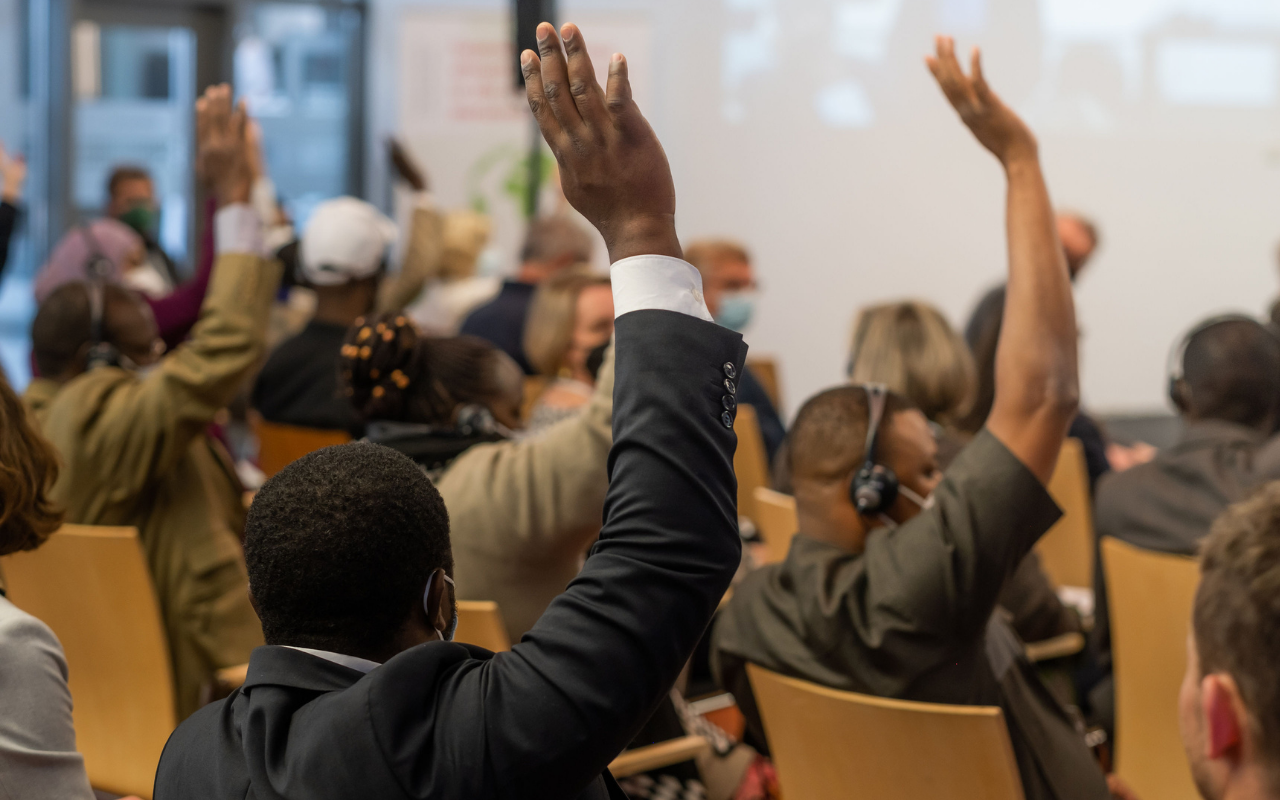
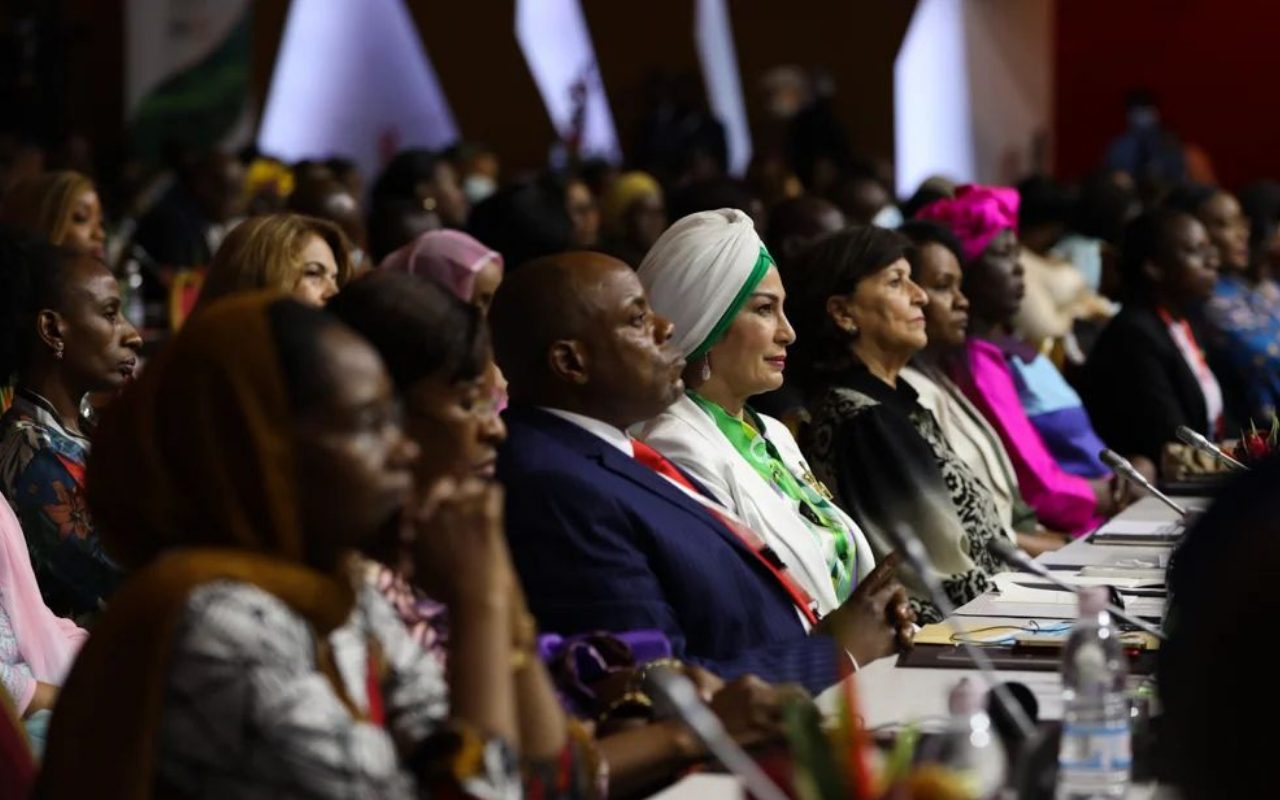
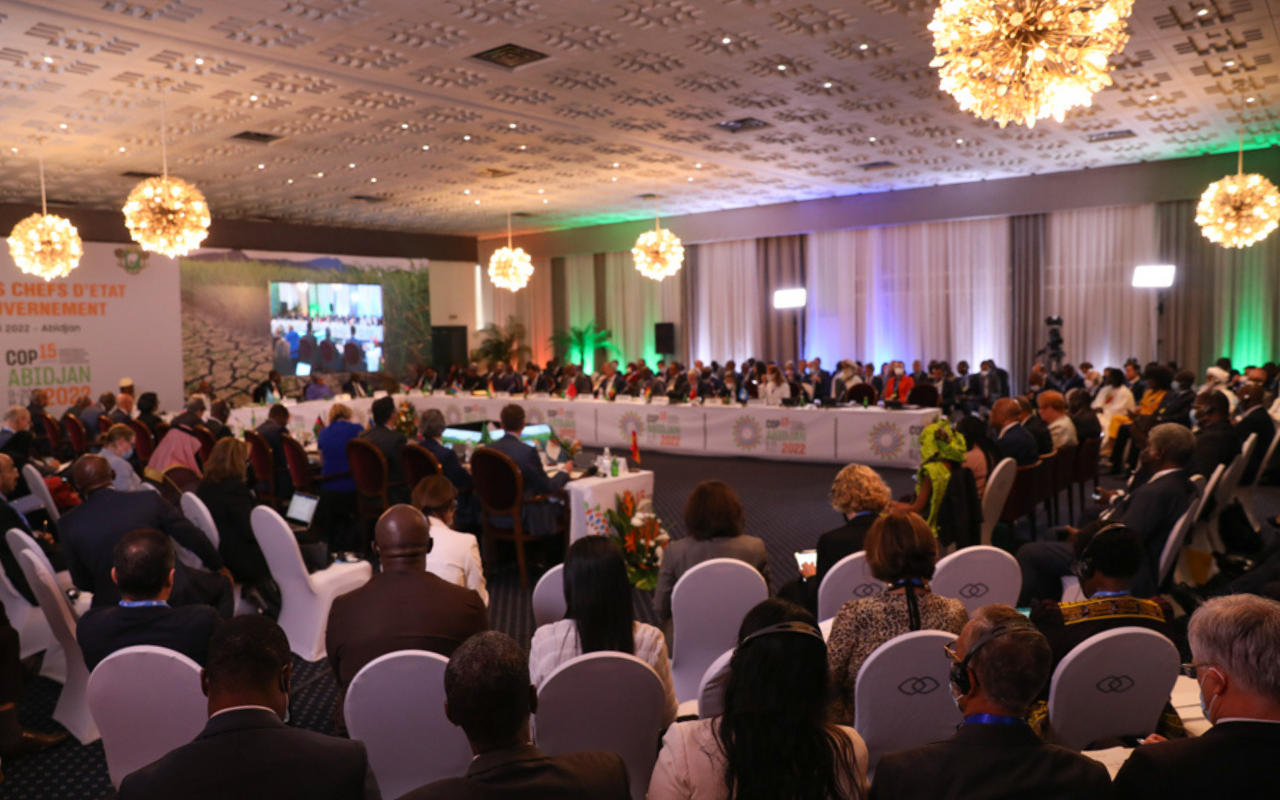
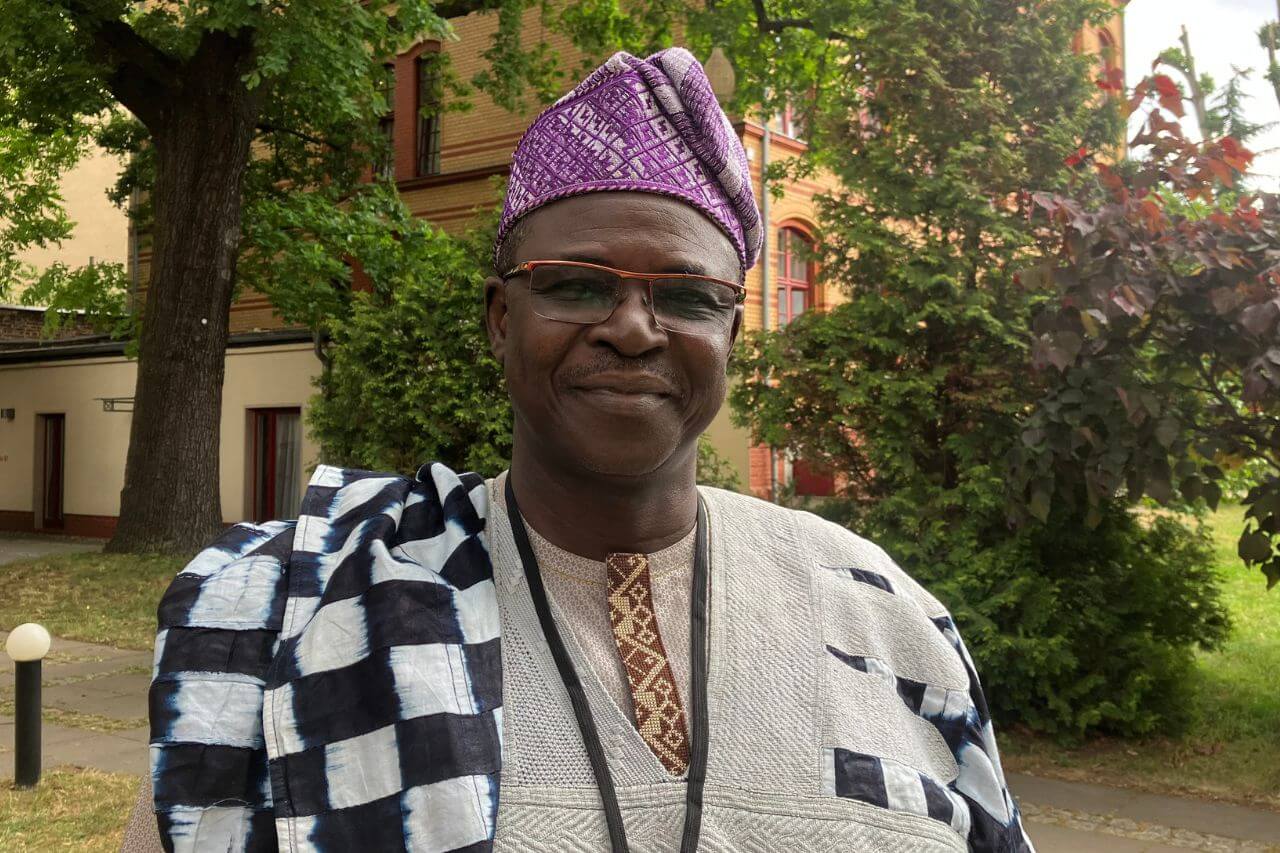
The rural population and vulnerable groups should be involved in the implementation of the African Union's (AU) Kampala Declaration on the transformation of agricultural and food systems. This is the demand of sociologist Lawani Arouna, Vice President of the Regional umbrella organisation of farmers' associations in West Africa (ROPPA). He made the statement during his participation in the conference "Partners for Change - SOILutions for a Food Secure, Resilient and Sustainable Future" in Berlin.
Lawani Arouna is Vice President of the Network of Farmers' Organisations and Agricultural Producers in West Africa (ROPPA). ROPPA is an initiative specifically for farmers' organisations and agricultural producers in West Africa. It comprises 13 national farmers' organisations from Benin, Burkina Faso, Côte d'Ivoire, Gambia, Ghana, Guinea, Guinea-Bissau, Liberia, Mali, Niger, Senegal, Sierra Leone, Togo and associated farmers' organisations (Cap-Green, Nigeria).
What are your impressions of the discussions at the Partners for Change conference?
My impression is very good, as we came here to discuss a relevant and very serious topic, namely the transformation of agricultural and food systems. This transformation is part of the challenges of the coming years. The paradox is that there is enough food in the world, but it is unfairly distributed. Farmers in the South, especially young people and women, have very low yields due to unequal access to the means of production. We can solve the problem of hunger in the world if the countries of the North and the South, especially the most vulnerable countries, come to the table to discuss and find relevant recommendations that are binding for our respective state authorities. We must combat all forms of exclusion.
"We must fight all forms of exclusion."
What solutions does your farmers' organisation ROPPA propose?
The most important task of a farmers' organisation like ROPPA is to influence policy. Previous policies have reached their limits. They need to be deconstructed and new proposals have to be made. Proposals that enable healthy and sustainable production. The cost and waste of food must be reduced. The circular economy must be promoted. We should also finally solve the problem of vulnerable groups, especially the youth and women in African countries. No policy can be successful if it does not address the issue of vulnerable groups, because the future of our planet depends on it. We need a more realistic and sustainable policy for agriculture and we need to rethink our entire agricultural and food system globally.
With the Kampala Declaration, the African Union set new standards for the transformation of agricultural and food systems in January 2025. How is ROPPA involved in this process?
ROPPA is involved in the Kampala process in four ways.
Firstly, we are speaking out in favour of family farming and focusing on the rights, needs and realities of family farms. Secondly, ROPPA will participate in the dialogue platforms set up by the African Union for the Kampala Process. Thirdly, we will assess the commitments set out in the Kampala Declaration and follow up on their implementation. Fourthly, we are committed to strengthening the capacities of farmers' organisations.
What does ROPPA expect from the Kampala Declaration?
ROPPA has high expectations of the Kampala Declaration. We call for family farms to be recognised and supported. The rural population must have the right to define their own agricultural and food policy.
We hope for targeted public investment in rural infrastructure, agricultural advice and adequate financing for producers. We demand social justice and inclusion for women, youth and marginalised groups. ROPPA dreams of a sustainable, resilient production system that respects local knowledge and ecosystems.
"We are reaching out to young farmers so that they can write their own story. Because tomorrow they will carry the future of African agriculture."
What is your hope for the young farmers in Benin?
The young farmers in Benin are the hope of tomorrow, they are the next generation. These young people are really combative, and we are empowering them to become good young professionals. Many of them are supported by their parents, while others are training for leadership positions or agricultural entrepreneurship so that they can take control of their own destiny. These young people have an extraordinary opportunity thanks to the new means of communication and information, the internet, digitalisation and artificial intelligence in agriculture. Today, they have many more opportunities to succeed than the older generations had in the past. We are reaching out to them so that they can write their own history. Because tomorrow they will carry the future of African agriculture.
In Togo’s capital, Lomé, home-grown rice costs almost twice as much as the imported product from Thailand. Yet there are good reasons for preferring the local product
Jehiel Oliver was a successful consultant. One day, he quit his job in investment banking to become a social entrepreneur. His mission: tractors for Africa. Rental tractors. What gave him that idea? Find out in his interview with Jan Rübel.
Supporting groups of smallholding women substantially contributes to strengthen rural operations economically. The organisation and associated group activities can help to reduce extreme poverty and improve the food situation.
Chancellor Merkel has begun an ambitious European political programme: Striving for compromise in budget negotiations, an orderly Brexit as well as an appropriate response to the corona crisis. Unfortunately, one of her positions that she previously held is nowhere to be found: Africa's prosperity is in the interest of Europe.
As President of the IABM cooperative in Muhanga, Alphonsine Mukankusi is not simply focused on the figures. She has learned how to deal with people and how to take on responsibility. At the same time, her work helps her to come to terms with the past
Small farmers are often left behind in African agriculture. Access to markets and improved competitiveness can only be achieved if the small farms join forces. But those affected in partner countries are often at a loss as to how to implement cooperative models. Here, the BMZ provides support through the SEWOH ONE World – NO Hunger initiative and the Social Structure Promotion (Sozialstrukturförderung).
A project by Deutscher Genossenschafts- und Raiffeisenverband e. V.
An Interview with Shamika Mone (INOFO) and Elizabeth Nsimadala (EAFF)
At the UN Food Systems Summit, farmers organizations have been represented on the international stage for the first time ever. Two representatives talk about bridging personal aspirations with the representation of regional needs and international negotiations.
Russia's war against Ukraine and its impact on food, energy and fertiliser prices is worrying farmers all over the world. Young farmers, farmer organisations and politicians from Kenya, Chad and Ukraine tell their stories and what keeps them in agriculture.
Karen Mapusua, President of IFOAM Organics International Network, on the danger of the current fuel crises and inflation to loose track in sustainablity, why organic farmers should be heard and how the word “crisis” has a very different meaning where she lives in Fiji.
A contribution by William Onura and Larissa Stiem-Bhatia
In agriculture it is important to include political stakeholders in the discourse. To build the bridge between practical application and political action, the think tank TMG launched the Governor's Day with Farmers in Kakamega County, Kenya. Now it took place for the second time. But what are the goals and benefits of the Governor's Day?
Four interviews kick off the relaunch under the new name „Food4Transformation“, asking the same questions from different perspectives. "Women and young people need access to land. And they need financial support to cultivate this land." - says Kolyang Palebele, President of the Pan African Farmers Organisation (PAFO).
The consequences of the Russian invasion of Ukraine have enabled many countries to open up new export markets for their agricultural goods. However, smallholder farms have been largely left out. Drawing on his experience in India, our author gives a brief overview of how this can be changed.
How can rural economies become viable and modern? William Madudike, youth representative of the Zimbabwe Farmers Union (ZFU) and a potato farmer himself, examines this question. He argues that the whole rural economy and actors from producers to consumers need to be considered. An interview on the initiative role of youth.
Partnerships are needed to face the multiple shocks for food systems. This is what Dr. Jacqueline Mkindi, president of the Agriculture Council Tanzania (ACT) and CEO of the Tanzanian Horticulture Association (TAHA) states.
During the Women Leadership Programme in May 2024, around 20 women from African countries and Germany met again for a one-week workshop in Bavaria, Germany to become fit for leadership in their organisations. One topic that concerns the women across countries is climate change, but also violence against women and their discrimination in agriculture.
Africa’s largest youth generation has the potential to transform agriculture sustainably. Young entrepreneurs like Febelsa in Mozambique are building agricultural businesses that fuel local growth.
As a passionate social scientist and entrepreneur from Malawi, Ngabaghila Chatata knows that she can overcome any challenge. Her story stands out in a country faced with high unemployment, particularly in its rural areas. As the managing director of Thanthwe Farms, she has set out to inspire the next generation of young agripreneurs – proving that successful business starts with the right mindset, not only capital.
German and Ugandan women farmers come together in Mecklenburg-Vorpommern to exchange experiences – from modern milking systems to the challenges of women's participation in agricultural decision-making. Amid goats, lavender ice cream, and engaging discussions, one thing becomes clear: women can achieve great things together, across borders and generations.
The demand for fair-trade cocoa is growing – but how is the industry responding? In an interview, Claudia Brück, Executive Board Member of Fairtrade Germany, and Dr. Torben Erbrath, Managing Director of the Federal Association of the German Confectionery Industry, discuss progress as well as challenges, and why real change can only be achieved through long-term commitment along the entire supply chain.
Development cooperation doesn't resonate in Germany? The Bavarian rural women have a different story to tell. A visit to a training session with female smallholder farmers from Kenya, Zambia and Uganda in Bavarian Herrsching am Ammersee.
How can food systems be made more resilient? Dietitian and nutrition expert Stacia Nordin talks about diversification, collaboration, and the role of different actors in driving sustainable change – and about what sustains hope in times of ongoing crises.
A Contribution by Global Donor Platform for Rural Development
The Global Donor Platform for Rural Development has recently published a new White Paper titled “Financing Agrifood Systems for People, Planet and Prosperity.” It outlines a practical agenda to unlock the capital, partnerships, and innovation required to drive change at scale.
Pratima Gurung has been advocating for the rights of Indigenous women with disabilities for years – in Nepal, across Asia, and globally. In this interview, she discusses progress, ongoing challenges, and why inclusion is a global issue that concerns us all. Her message: political spaces must be inclusive and intersectional.
Does Africa's youth want to live in the city or in the country? Which career path seems particularly attractive? And how optimistic are the young people about the future? Young adults from rural areas answered these questions by SMS.
How can agriculture modernise Africa? And does the road to the cities really lead out of poverty? Dr. Reiner Klingholz from the Berlin Institute for Population and Development in conversation with Jan Rübel .
In western Africa a new middle class is emerging. Their consumer behaviour is determining the demand for products – home-produced and imported goods, on the internet or at the village market. The people of Ivory Coast in particular are looking to the future with optimism.
Happy youngsters in rural areas, green development and the connection to the digital age – professor Joachim von Braun believes in this future sceneraio for Africa. For three decades the agricultural scienties has been researching how politics can create prosperty on the continent.
A report by T. S. Jayne, A. Adelaja and R. Mkandawire
Thirty years ago, Africa was synonymous with war, famine and poverty. That narrative is clearly outdated. African living standards are rising remarkably fast. Our authors are convinced that improving education and entrepreneurship will ensure irreversible progress in the region even as it confronts COVID-19.
Startups are booming in African agriculture. What are the current trend and challenges – and can other regions benefit from innovative approaches? A Video-Interview with Claudia Makadristo, Regional Manager of Seedstars
A contribution by the Bill & Melinda Gates Foundation
Africa’s population is young and ready to take its destiny into its own hands. Agriculture offers amazing opportunities in this regard. The Bill & Melinda Gates Foundation wants to support the next generation in this way.
A contribution by Heike Baumüller, Christine Husmann, Julia Machovsky-Smid, Oliver Kirui, Justice Tambo
Any initiative whose aim is to reduce poverty in Africa should focus first on agriculture. But what kind of investment has the greatest impact? The use of scientific criteria provides some answers.
A quick and cost-effective method calculates living wages and incomes for many different countries. The GIZ together with Fairtrade International and Richard and Martha Anker have developed a tool that companies can use to easily analyse income and wage gaps.
At the moment, the agricultural industries of African countries exist in relative isolation. Imagine peasant farmers digitally connected to the value chains of the global food industry. How could this happen? A guidebook.
Interview with Gnininkaboka Dabiré and Innocent Somé
Later on you want to become a farmer yourself, or would you prefer to take up another profession? Two young people from Burkina-Faso talked to representatives of the Dreyer Foundation about their parents' farms, the profession of farmer and their own plans for the future.
The soybean is a natural crop that can be used to make a lot of food. So, Tata Bi started a small processing business first on her own, then with a few other women, which provides the women with an additional source of income year-round besides selling the soybeans.
Africa has a huge opportunity to make agriculture its economic driver. However, the potential for this is far from being made exhaustive use of, one reason being that women face considerable difficulties in their economic activities. The organisation AWAN Afrika seeks to change this state of affairs.
What contribution does development cooperation make to conflict prevention? What can it do for sustainable peace? Political scientist Karina Mroß talks to Raphael Thelen about post-conflict societies and their chances for peaceful development.
What do electrical engineering, telecommunications and agriculture have in common? They arouse the passion of Strive Masiyiwa: Thirty years ago, he started an electrical installation company with $75, later riding the telecommunications wave as a pioneer. Today he is committed to transforming African agriculture.
The Cashew Council is the first international organisation for a raw material stemming from Africa. The industry promises to make progress in processing and refining cashew nuts - and answers to climate change
In the tropics rainforests are still being felled for the production of palm oil, meat and furniture. It is high time to act. Proposals are on the table.
Fish is important for combating malnutrition and undernourishment. But it is not only notable for its nutritional value, but also secures the livelihoods and employment for 600 million people worldwide.
The world’s population keeps on growing; with this rise comes an increased need for food as well as productive employment opportunities. Offering young people in rural areas better employment prospects is one of the objectives of the sector project. The young population is the key to a modern and efficient agricultural economy.
In October, the Committee on World Food Security (CFS) adopted policy recommendations ‘Promoting Youth Engagement and Employment in Agriculture and Food Systems’. Anke Oppermann answers five questions on youth employment in the agricultural sector.
Priscilla Impraim is one of the first women in Ghana to enter the chocolate business. Despite some hurdles, she founded the company Ab Ovo Confectionery Limited in 2006 with currently six permanent employees and 25 seasonal employees.
Saskia Widenhorn, Head of the Cotton Component in Cameroon and the Sub-Saharan Cotton Initiative at GIZ, reports on the Bremer Cotton Week, which brought together international industry experts. The agenda included supply chain transparency, sustainability and new forms of cooperation between the private sector and partner countries.
Three female entrepreneurs from Mozambique, Sri Lanka and Uganda tell their stories about starting organic businesses from scratch, now selling Baobab Oil, Gotukola powder and Shea butter in international markets. And they explain why their business is almost 100 percent female.
Kenya is a large importer of vetable oils mainly from Indonesia and Malaysia - amongst them sunflower oil. Due to the Russian war of aggression against Ukraine, there were supply bottlenecks and food shortages, leading to less affordable vegetable oils in Kenya. As a response to the lack of supply, the Sanga'alo Institute of Science and Technology, took that impulse, teamed up with the GIZ and established regional cultivation and refinement of sunflowers.
There are only about 1 million jobs in the East African country. The majority of the population works in the informal sector, and it can be difficult for them to find customers. Biscate offers a digital solution - without the need for internet, data or smartphones.
Together they are stronger: In many African countries, young men and women are coming together to form youth organisations. These organisations help young people in rural areas to earn a living in the agricultural and food sector, creating prospects for the future in rural areas.
gebana, a Swiss fair trade company, follows the principle of "sharing" with its corporate philosophy: farming families in the Global South participate directly in the sales of their online shop. Caroline Schaar, Marketing at gebana, explains the company's approach.
Maura Oerding has a mission: With the specialty coffee Angelique's Finest, she not only wants to enter new markets but also revolutionize the coffee industry. Her recipe for success? Empowering women from Rwanda and Uganda from cultivation to marketing. Oerding’s goal: quality, fairness, and self-determination in every bean.
A Conversation with Carmen Torres Ledezma & Oluwaseyi Kehinde-Peters
Female Leadership is vital to the transformation of agriculture and food systems. Therefore, it is so important to advance gender-sensitive approaches to increase the presence of women in leadership positions in agricultural production and to make these systems more equitable, sustainable and resilient.
Studies show that women often manage agricultural resources more effectively and sustainably. With equal access to production resources, agricultural yields could increase by up tp 30 per cent. But this is about more than just productivity. How can gender-transformative approaches (GTA) drive meaningful change and why are GTA key to sustainable change?
In a new study, the international humanitarian agency CARE analyses how the economic and social barriers faced by women significantly reduces the global gross domestic product (GDP). At the current rate, it will take 152 years to close the economic gap between women and men – although closing this gap would be extremely profitable from an economic perspective.
A Contribution by Carlos Castellanos & Yvonne Bielfeld
The shoe manufacturer Cueros Vélez as a good example of private sector responsibility: the photo gallery shows how the bark of the rubber tree becomes a reliable yet deforestation free companion on our roads.
For everyone in the supply chain to benefit, it is essential that politics and business work together. The measurable successes of such partnerships are demonstrated by the following six projects: they show how cooperation with the business sector can make supply chains fairer, more resilient, and more sustainable step by step.
African countries still face huge gender gaps in terms of access to work and capital. What are the consequences of Corona for women in Africa? Jan Rübel interviewed Léa Rouanet on lockdowns and gender-based violence. The economist works at the Africa Gender Innovation Lab of the World Bank.
Shortly before ending his position as Director General of the International Food Policy Research Institute (IFPR) Dr. Shenggen Fan talks about the reforms and new modes of operation needed to achieve global food security in the coming decade.
110 speakers from 120 countries met virtually at the Global Forum for Food and Agriculture (GFFA) to discuss the challenges to global food supply. They asked the question: How can food systems support the health of people and the planet?
Oxfam’s supermarket scorecard, which is in its third year, shows one thing in particular - it works! Supermarkets can change their business policies and focus more on the rights of those people around the world who plant and harvest food. However, this does not happen without pressure.
Stefan Liebing is chairman of the Africa Association of German Business. The manager calls for a better structure of African farms. Jan Rübel asked him about small farmers, the opportunities for German start-ups and a new fund.
Besides the well known impacts of Covid19 lockdowns for the adult population, the associated school closures led to 90 percent of the world’s children with no access to schools. However, school meals are in often the only daily meal for children. Without access to this safety net, issues like hunger, poverty and malnutrition are exacerbated for hundreds of millions of children.
The majority of producers in developing countries are women. Although they contribute significantly to the food security of their families, they remain chronically disadvantaged in male-dominated agriculture in terms of access to land, credit, technology and education.
A contribution by Nadine Babatounde and Anne Floquet (MISEREOR)
To prevent malnutrition among young children and strengthen the role of women in their communities, Misereor, together with the local non-governmental organisation CEBEDES, is implementing a programme on integrated home gardens in Benin - a series of pictures.
A contribution by Dr. Kathleen Mar and Dr. Nicole de Paula
Against the backdrop of the COVID-19 pandemic, health is receiving unprecedented public and political attention. Yet the fact that climate change is also affecting the environmental and social determinants of health in a profound and far-reaching way deserves further recognition.
When women have control over the resources of a household and manage the income, it usually leads to a more balanced and healthier diet for the family. But often the decision-making power lies with the men. How can this gender inequality be addressed? The GIZ global project Food Security and Resilience provides insights into project work on gender-transformative approaches finances by the Federal Ministry for Economic Cooperation and Development (BMZ).
Agrivoltaics is a concept that combines photovoltaic electricity generation and agricultural production, providing the opportunity for a more efficient land use and contributing overall to the integration of food, energy and water systems. This can be particularly interesting for countries in the Global South, where rural electrification rates are often low and food security needs to be improved.
Africa’s drylands seem to be predestined for generating solar and wind power – especially given the current hype over green hydrogen. However, pastoral communities are often put at a disadvantage in this respect. Our author describes the arising conflicts and what successful coexistence of green energy projects and the communities could look like.
Rose Okello is a Matoke farmer and single mother living in a village near Mbarara, a town in southern Uganda. To ensure that she can pay for her family's food, her children's school fees and other expenses on time, Rose uses various financial services. Her story portrays hurdles but also hope for women in agribusiness.
In 2025, GIZ and the Import Promotion Desk (IPD) celebrate ten years of successful cooperation. With their joint stand at BIOFACH trade fair in Nuremberg, they were able to introduce over 300 organic companies of partner countries to the European market. And the journey continues – despite challenges on the global market.
A conversation with Caroline Kayanja, Dr. Eileen Nchanji, & Theresa Herbold
A transformation of agricultural and food systems is not possible without overcoming structural gender inequalities. In this discussion, Caroline Kayanja (UCOBAC), Dr Eileen Nchanji (CIAT) and Theresa Herbold (Ministry of Development) reflect on the key challenges and solutions – from land access and representation to women-led collectives and innovative technologies.
Food systems shape social realities. Whether legal claims can be enforced also depends on access to legal institutions. Camara Castro from the Amka Africa Justice Initiative shows how legal work in Kenya helps reduce the gap between law and lived reality and contributes to making agri-food systems more just.
Disruption or transformation? With the new Strategic Foresight Report for Agriculture and Food Systems, the Deutsche Gesellschaft für Internationale Zusammenarbeit (GIZ) looks into future scenarios of the post 2030 era.
Climate adaptation, youth empowerment, and food systems intersect with challenging social and political conditions. Lucky Andrianirina illustrates how young people in Madagascar navigate structural barriers, translate global agendas into local action, and understand agriculture as a space of agency and hope.
The International Year of the Woman Farmer (IYWF), launched by the United Nations for 2026, is more than a symbolic moment. It is a political opportunity – and responsibility – for German development cooperation. This is what the Federal Ministry for Economic Cooperation and Development (BMZ) emphasised during Grüne Woche trade fair in Berlin.
Food systems are often reduced to production and trade. Mary Karanu of Welthungerhilfe in Kenya shows that they also reflect social and political orders, shaping power relations, the recognition of labor, and structural vulnerability across smallholder contexts in Africa and global supply chains.
In southern Benin, Julienne processes soybeans into tofu. Rather than relying on subsidies, she has built her own business step by step. Her path shows how local financing, shared risk assessment, and entrepreneurial skills contribute to transforming agrifood systems.
Food systems vary widely between communities. While global agendas offer general guidance, effective change requires context-specific interventions at the local level. Placing the needs of local communities at the center of these efforts is essential. The visioning process can help achieve this, says Fyness Lydia Ching’oma from GIZ Malawi.
This is a benchmark for everybody: More rights for women are a very influencing solution in the struggle against extreme poverty and hunger worldwide, says Stephan Exo-Kreischer, Director of ONE Germany. The organisation specialises in political campaigning as a lever for sustainable change.
By leasing a three hundred hectare fruit plantation in Ethiopia, Lutz Hartmann has realised a long-cherished dream: to run his own business in Africa. Now he has a personal interest in the issue of Africa’s development.
A contribution by Jes Weigelt and Alexander Müller
What is required to make food systems provide sufficient, healthy food while not harming the planet? How should food security be maintained given the threat posed by climate change? Our authors look at some aspects of tomorrow’s food systems against the backdrop of the corona crisis.
A contribution by Michael Windfuhr (German Institute for Human Rights)
Land rights are no longer governed by the law of the strongest. That is what the international community has agreed to. Governments and private companies have a duty to respect human rights and avoid corruption.
A contribution by Roselyn Korleh and M. Sahr Nouwah (WHH)
The Liberian town of Kinjor is a picture-book example for what happens, if land rights aren’t protected, and it illustrates how to move forward from there. The keyword: Multi-Actor Partnership
A contribution by Dr. Karin Gaesing and Prof. Dr. Frank Bliss (INEF)
Especially in densely populated areas, land pressure leads to overexploitation of available land and a lack of conservation measures. The West African country of Benin, with heavily depleted soils in many places, is no exception.
Three quarters of the world's population do not have secure land rights, which hinders investment and innovation. The project "Improvement of Livelihood and Food Security" supports smallholder farmers in acquiring land.
"One World no Hunger" (SEWOH) becomes one of the five core themes of the BMZ. Dirk Schattschneider, SEWOH Commissioner about previous approaches, future areas of action, and the political will to end hunger.
How the UN Voluntary Guidelines on the Responsible Governance of Tenure of Land, Fisheries and Forests (VGGT) contribute to fairer and more secure land access.
At the UNCCD COP15, the Töpfer Müller Gaßner Think Tank (TMG) hosted four side events. The agenda of the kick-off event included discussions for the Human Rights and Land Navigator.
In the midst of global climate discussions, a resounding call emerges: Women's land rights must be the cornerstone of our climate actions. They're not just pieces of the puzzle; they form the foundation for true climate resilience. TMG Think Tank for Sustainability reports from the first African Climate Summit.
In the West Bank, political tensions and increasingly poor weather conditions are making farming more difficult. What needs to be done? Questions for Abbas Milhem, Executive Director of the Palestinian Farmers Union (PFU).
In the #HerLand campaign for COP16, the UNCCD is focusing on women as key players in conserving soils and combating drought. The Deutsche Gesellschaft für Internationale Zusammenarbeit (GIZ) has also contributed to the campaign focusing on securing women's land rights.
Two new podcast formats from the Deutsche Gesellschaft für Internationale Zusammenarbeit (GIZ) bring stories from on-the-ground project work to life: "Over to you!" from Malawi and "Voices of Change – Beneficiary Story Book" from Zambia. At the heart of these podcasts are the people behind the changes toward sustainable food security.
The Global Hunger Index (GHI) 2020 shows that the world is not on track to meet the international goal of “zero hunger by 2030”. If we continue at our current speed, around 37 countries will not even have reached a low hunger level by 2030.
Innovation is the only way to end hunger worldwide by the deadline we have set ourselves. The secret lies in networking and sharing ideas – and several initiatives are already leading by example.
A contribution by Sarah D´haen & Alexander Müller, Louisa Nelle, Bruno St. Jaques, Sarah Kirangu-Wissler and Matteo Lattanzi (TMG)
Young farmers’ insights on the effects of the COVID-19 pandemic on food systems in Sub-Saharan Africa @CovidFoodFuture and video diaries from Nairobi’s informal settlements.
Urban gardening is becoming increasingly popular in northern metropoles. People who consider themselves part of a green movement are establishing productive gardens in the city, for example on rooftops or in vacant lots. In severely impoverished regions of the global South, urban agriculture is a component of the food strategy.
After four years of Donald Trump in the White House, it is time to take stock: What policies did the Republican government pursue in African regions? And what will change in favor of Joe Biden after the election decision? Here is an evaluation.
Corona makes it even more difficult to achieve a world without hunger by 2030. So that this perspective does not get out of sight, Germany must play a stronger role internationally - a summary of the Strategic Advisory Group of SEWOH.
Interview with Paul Newnham, Director of the SDG 2 Advocacy Hub.
The UN Food Systems pre-Summit in Rome dealt with transforming the ways of our nutrition. How do you bring that to a broad public? Questions to Paul Newnham, the Director of the Sustainable Development Goal (SDG) 2 Advocacy Hub.
An Interview with Francisco Marí (Brot für die Welt)
Brot für die Welt (Bread for the World) did not attend the UNFSS pre-summit. Instead, the organisation took part in a counter-summit that took place at the same time. A conversation with Francisco Marí about the reasons, the process - and an outlook for the future
From a circular food system in Rwanda to functioning cooled transports in Kenya: The lab of tomorrow addresses development challenges such as preventing food loss and waste
In Zambia, innovative approaches are used to address the problem of post-harvest losses in the groundnut value chain. GIZ's Rapid Loss Appraisal Tool (RLAT) can help to develop more such approaches.
Every one degree Celsius rise in temperature increases the risk of conflict by two to ten percent. The climate crisis is a humanitarian crisis, as the photos by Christoph Püschner and Frank Schultze illustrate.
At the climate conference in Glasgow, activists from various groups protested again – Leonie Bremer from ‘Fridays for Future’ was there too. How can climate protection and development cooperation work hand in hand?
Whether it's banana bread made from brown bananas, conscious shopping plans or foodsharing, we give you five tips on how to reduce your everyday food waste.
At LCOY Germany, the local youth climate conference, views on climate protection from all political spectrums are discussed. The Fairactivists, a programme of Fairtrade Germany, participated with a panel discussion on the link between social justice and climate justice.
Chancellor Angela Merkel in the Podcast of the Federal Government
At the start of World Food Week around World Food Day on 16 October, Chancellor Angela Merkel stressed that the fight against global hunger will only be successful with international responsibility and solidarity (german only).
Nutrition rarely fails for lack of knowledge, but for lack of structure. In conversation with Dr. Sachin Gupte from PATH, attention turns to the often unseen foundations of food systems – where climate pressures, political frameworks, and economic realities shape what can endure, and what cannot.
We use cookies on our website. Some of them are essential, while others help to improve your user experience. Your consent is voluntary and can be revoked at any time on the "Privacy" page.
Protects against cross-site request forgery attacks
Retention period: This cookie remains only for the current browser session.
Saves the current PHP session.
Retention period: This cookie remains only for the current browser session.
Content from third-party providers, such as YouTube, which collect data about usage. Third-party content embedded on this website will only be displayed to you if you expressly agree to this here.
Provider: Google Ireland Ltd., Gordon House, Barrow Street, Dublin 4, Ireland
Retention period: Here you can learn more about the storage period of the cookie: https://policies.google.com/privacy.
Provider: Vimeo, Inc. / 555 West 18th Street New York, New York 10011, USA
Retention period: Here you can learn more about the storage period of the cookie: https://vimeo.com/privacy.
We use Matomo analytics software, which collects anonymous data about website usage and functionality to improve our website and user experience.