Why organic is a „blessed” method

Claudia Jordan
Three female entrepreneurs from Mozambique, Sri Lanka and Uganda tell their stories about starting organic businesses from scratch, now selling Baobab Oil, Gotukola powder and Shea butter in international markets. And they explain why their business is almost 100 percent female.

Women and girls are more likely than men and boys to suffer poverty, hunger and violence, and in many countries have poorer access to education, health care and social protection. ©Deepak Kumar, Unsplash, 2021

By Deutsche Gesellschaft für Internationale Zusammenarbeit (GIZ)

The Deutsche Gesellschaft für Internationale Zusammenarbeit (GIZ) is a globally active provider of international cooperation for sustainable development. It has more than 50 years of experience in a wide range of fields.  

All contributions
Ich bin ein Alternativtext
Milagre Nuvunga, co-founder and executive director of Micaia foundation, which supports 3.500 female Baboab harvesters in Manica province in central Mozambique with the help of GIZ and Import Promotion Desk (IPD). ©Claudia Jordan, GIZ, 2023

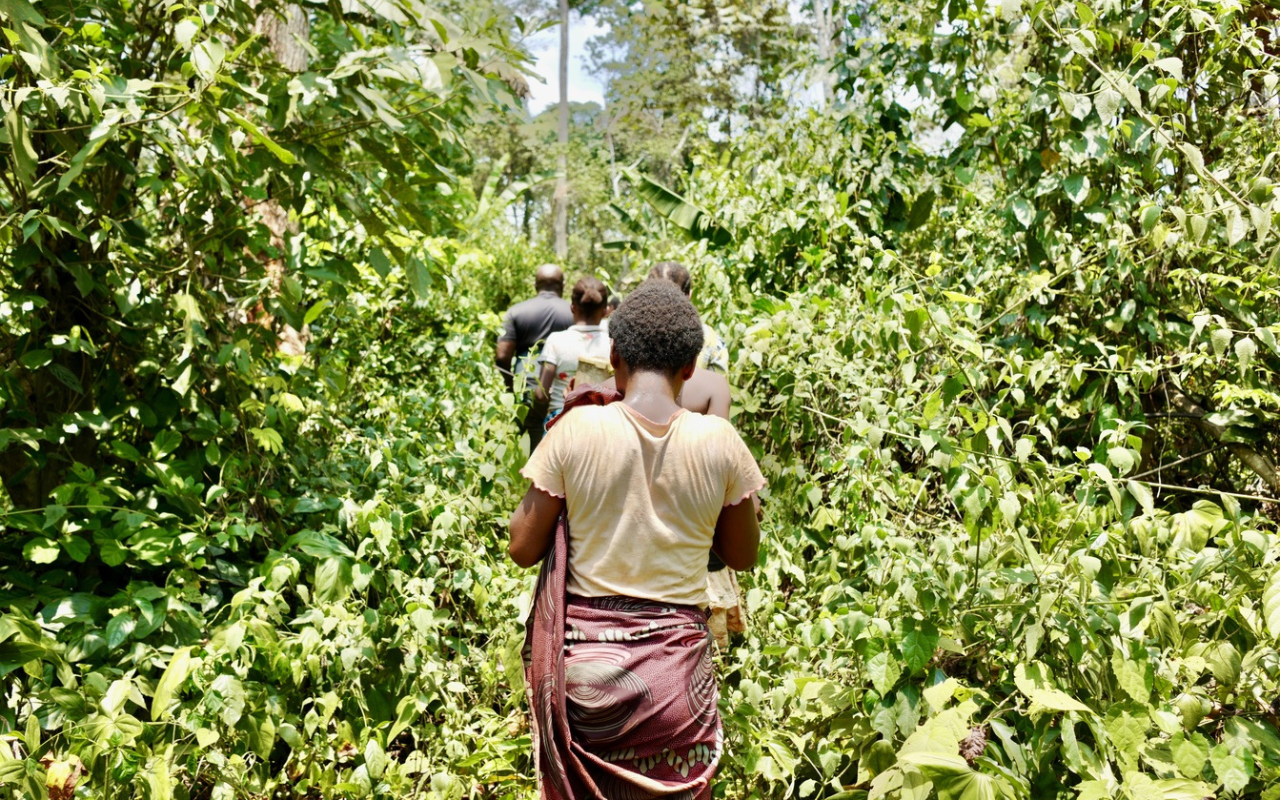
Milagre Nuvinga could see the change not only in the faces, but also in the villages. The structural poor Manica province in central Mozambique is a very dry region. „Everything was brown, poor and depressed“, the organic entrepreneur tells. „There was nowhere to go and nothing to dream.” This was before Milagre Nuvunga, herself a forest engineer, started a Baobab business with 500 female harvesters, bringing the women into jobs and including them in business development.


From then on, something has visibly changed. “Now, when you visit the houses in the villages, they look beautiful and clean, and people look beautiful and colourful, too”, she says. People had very little self-esteem, didn’t invest much in themselves. “Now, the women do their hair and their kids look beautiful, too.” Also, the men reacted. “Some of them were drinkers, but when they saw their wives changing, they themselves decided to change, because they felt proud of their women.”


Why all this has changed? Because the women have started to take their future into their own hands. In a society with polygamous marriages and women leaving school before they learn to read and write, and in an area with a depressed economy and little perspectives, many of the women have no chance to build on their own path with a business or job for their own income. When Milagre Nuvunga started the inclusive business “Baobab products Mozambique” with around 500 women, the Baobab trees in the region weren’t valued. Traders from Malawi and Mozambique bought it for very cheap prices. “Men in the patriarchal communities are charged with earning the money. They would not waste their time with Baobab trade. So, they left it to the women”, she says and smiles.


In order to be able to produce high quality Baobab oil and powder products, Nuvunga started to look at all aspects of the collection of the fruits and pre-processing, worked on hygiene, how to prevent mould. In order to check the opportunities for regional and international trade of their Baobab products, she also talked to certifiers to see how they could organise this business with women.


When they participated at the Biofach trade fair, supported by Deutsche Gesellschaft für Internationale Zusammenarbeit (GIZ) and Import Promotion Desk (IPD), they received the organic certificate for their Baobab products. They started getting buyers from Europe and the business grew. Today, the business includes 3.500 female harvesters, registered exports of powder have increased from zero to more than 150 tons per year.


“For many of the women being able to write their names and sign papers in the context of business was a huge step.”


“As the business grew, women needed to grow with it”, Nuvunga says. With the Micaia foundation that she is leading, she works on social and environmental issues that are connected to the business. In small learning groups, she supports the women in enhancing their basic skills. “Many of them come out of school very early and have early marriages. For many of them being able to write their names and sign papers in the context of business was a huge step. So, we started organising that.” GIZ supported the women in the association development, saving and credit skills. “They were able not only to dream but to discuss what business opportunities they had,” Nuvunga states.


With the money they earn through the Baobab products, the women build their own businesses. They travel to nearby towns or beyond, see what markets exist outside to bring products to their communities. With the capital from the Baobab trade, they buy and sell household goods, clothing, open their own bars. They also are able to keep their children in school and buy books for them. “All this opened a space for them to start to invest in their own lifes”, Nuvunga concludes.


Ich bin ein Alternativtext
Lakmini Weerakkody, founder and managing director of Lak Nature International in Sri Lanka, a 100 percent female factory processing fruits, leaves and vegetables. ©Claudia Jordan, GIZ, 2023

Lakmini Weerakkody saw 30 percent of fruits and vegetables go to waste in the post-harvest process in Sri Lanka. This led the industrial manager to invent a machine to dehydrate fruits and vegetables and built her own factory manufacturing these products, together with the Gotu Kola plant. “During the pandemic, the demand for healthy food raised and I invested more in the Gotu Kola plant. I manufacture the Gotu Kola powder for herbal drinks, skin care and salat dressing”, she says. After having started the business in 2019, she built a new factory in 2021, called Lak Nature International.


“My factory is 100 percent female”


... she says with a proud smile. She has 15 female employees and works with around 30 female farmers that supply her the products. “Many of the women in the region are housewifes and have no income. I took them to my factory and provided flexible time to work there.” After testing their land and soil if they can produce organically, she invited female farmer groups to produce Gotukola plants and supply the factory with them. “I also train them in producing organically. We produce 20 tons per year. They now have extra income for their families.”


Today, she is indirectly exporting to more than 10 countries. With already several international certifications, she is currently applying for organic certification. GIZ project “Strengthening Small and Medium-sized Enterprises in Sri Lanka” supports her in her business development and creating her own brand.


Ich bin ein Alternativtext
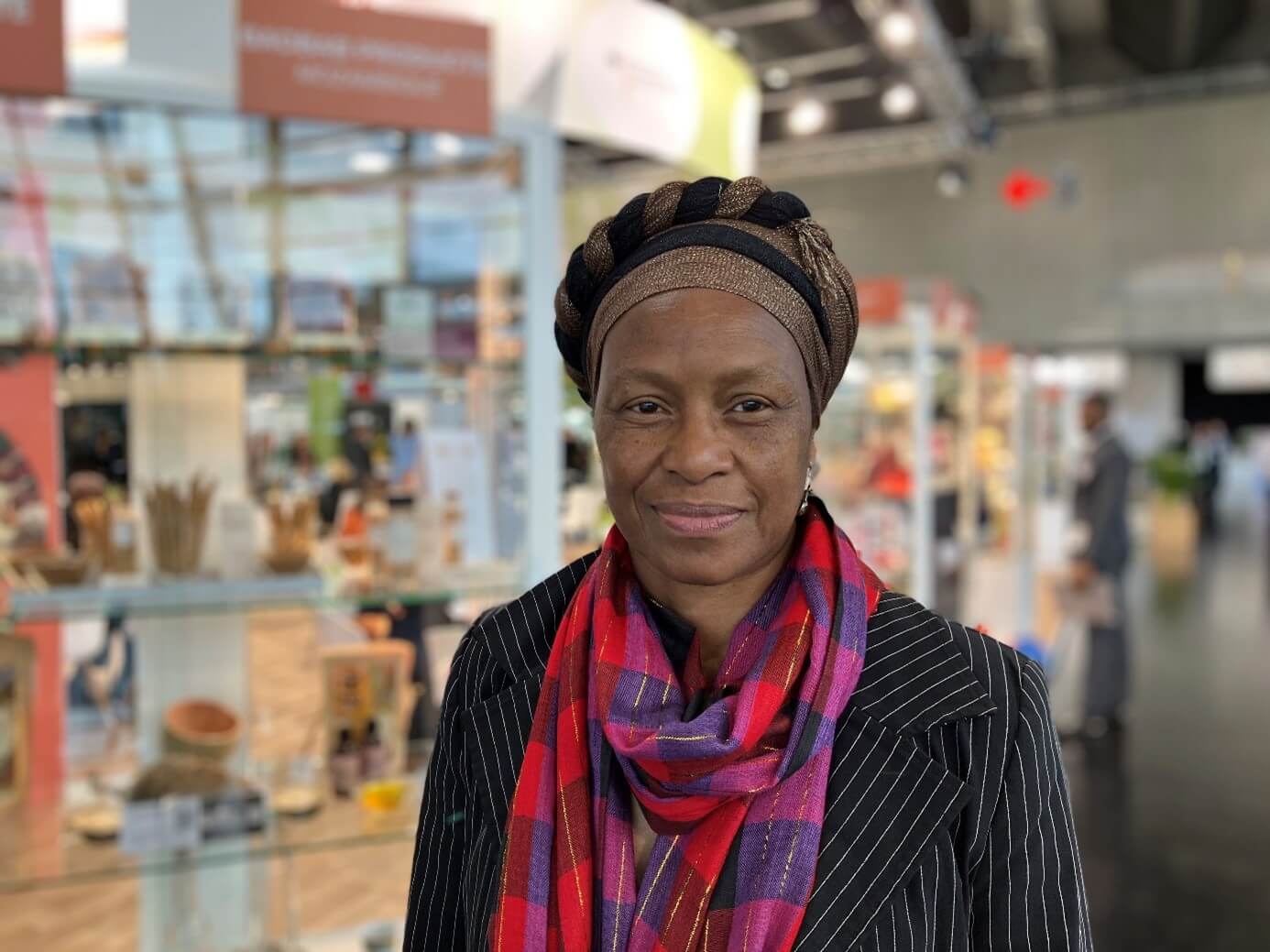
Ugandan founder and director of Blessed Organic Release, Margaret Laloyo, presenting Shea butter products on Biofach fair in Nuremberg. ©Claudia Jordan, GIZ, 2023

For Margaret Laloyo, the civil war in her country made her feel the need for change. During the conflict in Northern Uganda (1987-2006), large parts of the population were internally displaced and lived in refugee camps for more than 20 years. “That drowned them into a dependency mindset”, the biochemist states. She addressed the women in the refugee camps and said: “Stop saying ‘we need’ and start to see what you actually have available.”


And there were these Shea trees, the highest popluation in the Agago district in Northern Uganda. They were at risk of being extict and the women started campaigning for the conservation of the trees. With 25 women, Laloyo started processing the Shea. She worked with the families and included the youth.


“Organic is a blessed method, because it protects the health of the soil, the insects, animals and the people.”


... says Margaret Laloyo. They were aware that with this step, they broke cultural norms. “The tribes there didn’t believe in women owning anything”, Laloyo explains. And in fact, the land they were working on is owned by men until today. But they continued. And the movement with 25 women grew to an organisation titled “Blessed Organic Release”, including 6.000 female harvesters. Every woman got a bank account. “Initially, they feared it, because they were illiterate. But they succeeded and now they have safe money for school fees.”


When the war stopped in 2006, they started working on the quality management. With training at the American Shea Butter Institute, they reached Grade A, the maximum quality. They were able to get a bigger buyer in Canada who took 500 kilogramms of Shea butter – a great motivation for the women. In 2015, they got the EU organic certification and came to Biofach fair as exhibitors in the African pavillion.


Even in 2023, “Blessed Organic Release” presented its Shea butter for skin, Shea oil and Shea honey there. And the word “blessed” in the name has its implications: “As a Christian, I am convinced: Organic is a blessed method, because it protects the health of the soil, the insects, animals and the people. It’s not just a question of believe – ‘blessed’ is a positive statement, even if you don’t believe. Our organisation is not faith-based or political. We accept people of all faiths. We work with poor people. Poverty is poverty.”


Similar articles

A group of people walks through a dense, green forest path, surrounded by lush vegetation on a sunny day.

Feminist development policy – A new beginning?

An Interview by Journalist Jan Rübel

Cameroonian gender and peace activist Marthe Wandou on the role of women and girls in development policy – then and in the future.

Read more

A group of women in colorful clothing and headwraps gather outdoors, engaged in conversation near rustic buildings.

Small cup, big impact

A Contribution by UFULU and GIZ

A menstrual health pilot in Rural Malawi empowers rural women in Agribusiness through hygiene products and helps to improve working conditions in rural areas.

Read more

A large group of people pose together at the 2022 regional conference in Lusaka, Zambia, celebrating agricultural finance initiatives.

Digital participation in the agrofinance sector: rural development and women's inclusion

A Contribution by GIZ

Data security, financing, the automation of loans and the use of alternative data - the digitalisation of financial services in the agricultural sector has many facets, which an international conference with representatives of the agricultural finance sector in Zambia addressed. But how does the digitalisation of financial services contribute to rural development and the inclusion of women?

Read more

Women in colorful attire sift grains under a sunny sky, engaging in traditional agriculture. | © GIZ Joerg Boethling

What connects gender and the environment

Women can play a vital role in the change process both when it comes to climate protection and adapting to climate change. But the reality is often still not quite like this: women and girls are particularly badly affected by the climate crisis. Is the topic of gender getting enough attention at the upcoming climate conference? Questions for Bettina Jahn from UN Women Germany.

Read more

A group of men wearing masks engage in a fruit preparation activity, emphasizing that nutrition is not just a woman's concern.

Nutrition is not just a women’s issue

A contribution by GIZ

When women have control over the resources of a household and manage the income, it usually leads to a more balanced and healthier diet for the family. But often the decision-making power lies with the men. How can this gender inequality be addressed? The GIZ global project Food Security and Resilience provides insights into project work on gender-transformative approaches finances by the Federal Ministry for Economic Cooperation and Development (BMZ).

Read more

Aerial view of a Madagascar landscape showing a patchwork of fields and a dirt road dividing dry and green areas.

Towards Climate Justice: Securing Women’s Land Rights for a Resilient Tomorrow

A Contribution by TMG

In the midst of global climate discussions, a resounding call emerges: Women's land rights must be the cornerstone of our climate actions. They're not just pieces of the puzzle; they form the foundation for true climate resilience. TMG Think Tank for Sustainability reports from the first African Climate Summit.

Read more

A woman in a blue headscarf carries freshly harvested onions in a vibrant field, showcasing sustainable solar irrigation.

Learning from Each Other

An Interview with Dr. Jacqueline Mkindi

Partnerships are needed to face the multiple shocks for food systems. This is what Dr. Jacqueline Mkindi, president of the Agriculture Council Tanzania (ACT) and CEO of the Tanzanian Horticulture Association (TAHA) states.

Read more

A woman in a pink shawl waters young plants in a garden, promoting sustainable agriculture. | © GIZ Climax Film Production

Gender Justice – a Precondition for Resilience

A contribution by IFPRI

Women and girls in poorer countries are affected in particular ways by the multiple crises the world is currently facing. Uncovering the linkages between gender, resilience and food security, experts from International Food Policy Research Institute (IFPRI) look at ways to support women and girls’ capacity to respond to crises.

Read more

A smiling woman in a green shawl raises her hand enthusiastically during a conference meeting.

Shu Wen Ng, the Clear-Sighted

An Interview with Shu Wen Ng

Shu Wen Ng is a health economist. She knows what is best suited to go on a plate. But how can this be achieved on a mass scale in countries with lower incomes? "The solutions to gett there already exist," she says, "but what is often missing is courageous leadership to implement them."

Read more

A woman in a patterned outfit harvests bananas in a lush field, surrounded by tall green plants.

Against all Odds

A Contribution by Claudia Huber

Rose Okello is a Matoke farmer and single mother living in a village near Mbarara, a town in southern Uganda. To ensure that she can pay for her family's food, her children's school fees and other expenses on time, Rose uses various financial services. Her story portrays hurdles but also hope for women in agribusiness.

Read more

A woman in a pink headscarf and floral dress stands confidently in a lush garden. | © Claudia Jordan

Stick together and learn from each other

By Claudia Jordan

During the Women Leadership Programme in May 2024, around 20 women from African countries and Germany met again for a one-week workshop in Bavaria, Germany to become fit for leadership in their organisations. One topic that concerns the women across countries is climate change, but also violence against women and their discrimination in agriculture.

Read more

A woman in a red headscarf observes young plants growing in a greenhouse, tending to them carefully.

Uprooting the Norm

A Contribution by GIZ

As a passionate social scientist and entrepreneur from Malawi, Ngabaghila Chatata knows that she can overcome any challenge. Her story stands out in a country faced with high unemployment, particularly in its rural areas. As the managing director of Thanthwe Farms, she has set out to inspire the next generation of young agripreneurs – proving that successful business starts with the right mindset, not only capital.


Read more

A diverse group of women in casual attire smiles together outdoors, celebrating unity and community spirit.

Where Goats Listen to the Radio

A Contribution by GIZ

German and Ugandan women farmers come together in Mecklenburg-Vorpommern to exchange experiences – from modern milking systems to the challenges of women's participation in agricultural decision-making. Amid goats, lavender ice cream, and engaging discussions, one thing becomes clear: women can achieve great things together, across borders and generations.

Read more

Five women in colorful attire proudly display their land titles in Madagascar, celebrating empowerment and ownership.

Towards more equitable rural realities

A Contribution by GIZ

In the #HerLand campaign for COP16, the UNCCD is focusing on women as key players in conserving soils and combating drought. The Deutsche Gesellschaft für Internationale Zusammenarbeit (GIZ) has also contributed to the campaign focusing on securing women's land rights.

Read more

A person tends to drying coffee beans on raised beds under a bright blue sky in a lush rural setting.

Improving The World, Sip by Sip

A Conversation with Maura Oerding

Maura Oerding has a mission: With the specialty coffee Angelique's Finest, she not only wants to enter new markets but also revolutionize the coffee industry. Her recipe for success? Empowering women from Rwanda and Uganda from cultivation to marketing. Oerding’s goal: quality, fairness, and self-determination in every bean.

Read more

A woman in a blue sari arranges white silk cocoons on a woven wall in a rural setting.

Gender-Transformative Approaches – Unlocking Everyone’s Potential

A Contribution by GIZ

Studies show that women often manage agricultural resources more effectively and sustainably. With equal access to production resources, agricultural yields could increase by up tp 30 per cent. But this is about more than just productivity. How can gender-transformative approaches (GTA) drive meaningful change and why are GTA key to sustainable change?

Read more

A smiling woman in a polka dot dress holds a baby, embodying change and joy in a lush outdoor setting.

Women as Change Agents

A conversation with Caroline Kayanja, Dr. Eileen Nchanji, & Theresa Herbold

A transformation of agricultural and food systems is not possible without overcoming structural gender inequalities. In this discussion, Caroline Kayanja (UCOBAC), Dr Eileen Nchanji (CIAT) and Theresa Herbold (Ministry of Development) reflect on the key challenges and solutions – from land access and representation to women-led collectives and innovative technologies.

Read more

A group of women stands smiling on a lawn in Herrsching am Ammersee, surrounded by lush greenery and a building.

"We want to change the narrative of rural women"

A Contribution by GIZ

Development cooperation doesn't resonate in Germany? The Bavarian rural women have a different story to tell. A visit to a training session with female smallholder farmers from Kenya, Zambia and Uganda in Bavarian Herrsching am Ammersee.

Read more

(c) Christoph Püschner/Brot für die Welt
Mali / Bamako, Dez. 2017: eine Selbsthilfegruppe von zurückgekehrten Migrantinnen, die sich gegenseitig bei der Integration unterstützen.

"Pandemic increases violence against women"

Interview with Léa Rouanet

African countries still face huge gender gaps in terms of access to work and capital. What are the consequences of Corona for women in Africa? Jan Rübel interviewed Léa Rouanet on lockdowns and gender-based violence. The economist works at the Africa Gender Innovation Lab of the World Bank.

Read more

A man in a suit and glasses speaks at an International Food Policy Research Institute event.

5 questions to S. Fan: Where are the new roads?

Interview with Shenggen Fan

Shortly before ending his position as Director General of the International Food Policy Research Institute (IFPR) Dr. Shenggen Fan talks about the reforms and new modes of operation needed to achieve global food security in the coming decade.

Read more

A large video wall displays numerous participants in a virtual conference with a "goes virtual" banner prominently featured.

GFFA 2021 focussed on climate and COVID-19

A report by David Sahay (Zeitenspiegel)

110 speakers from 120 countries met virtually at the Global Forum for Food and Agriculture (GFFA) to discuss the challenges to global food supply. They asked the question: How can food systems support the health of people and the planet?

Read more

Teilnehmer einer Schulung im Digital Transformation Center Kigali, Ruanda. © Mali Lazell, GIZ

Africa's rapid economic transformation

A report by T. S. Jayne, A. Adelaja and R. Mkandawire

Thirty years ago, Africa was synonymous with war, famine and poverty. That narrative is clearly outdated. African living standards are rising remarkably fast. Our authors are convinced that improving education and entrepreneurship will ensure irreversible progress in the region even as it confronts COVID-19.

Read more

Vibrant scene in Abidjan market with vendors balancing colorful fruits and vegetables on trays amid bustling crowds.
Food market in Abidjan. © GIZ

Reference values: A building block on the road to social equality

A contribution by Friederieke Martin (GIZ)

A quick and cost-effective method calculates living wages and incomes for many different countries. The GIZ together with Fairtrade International and Richard and Martha Anker have developed a tool that companies can use to easily analyse income and wage gaps.

Read more

A supermarket receipt design displays "SUPERMARKT-CHECK 2020" with logos, focusing on retail evaluation.

Supermarket Scorecard on Human Rights

A contribution by Dr. Franziska Humbert (Oxfam)

Oxfam’s supermarket scorecard, which is in its third year, shows one thing in particular - it works! Supermarkets can change their business policies and focus more on the rights of those people around the world who plant and harvest food. However, this does not happen without pressure. 

Read more

A man in a white coat examines labeled seed bags on wooden shelves, showcasing a collection of agricultural samples.

Wanted: German investment in African agriculture

Interview with Stefan Liebing

Stefan Liebing is chairman of the Africa Association of German Business. The manager calls for a better structure of African farms. Jan Rübel asked him about small farmers, the opportunities for German start-ups and a new fund.

Read more

A group of women, some wearing green "d.light" shirts, gather for a photo in a well-lit room.

How the self-help approach empowers smallholder women

A report by INEF and Kindernothilfe

Supporting groups of smallholding women substantially contributes to strengthen rural operations economically. The organisation and associated group activities can help to reduce extreme poverty and improve the food situation.

Read more

Four smiling children joyfully eat together at a table, sharing bowls of food in a warm, vibrant setting.

School Feeding: A unique platform to address gender inequalities

A contribution by Carmen Burbano de Lara (WFP)

Besides the well known impacts of Covid19 lockdowns for the adult population, the associated school closures led to 90 percent of the world’s children with no access to schools. However, school meals are in often the only daily meal for children. Without access to this safety net, issues like hunger, poverty and malnutrition are exacerbated for hundreds of millions of children.

Read more

A smiling woman wearing a colorful headscarf stands in a sunlit field, exuding joy and confidence.

Africa's face of agriculture is female

A contribution by Beatrice Gakuba (AWAN-AFRIKA)

Africa has a huge opportunity to make agriculture its economic driver. However, the potential for this is far from being made exhaustive use of, one reason being that women face considerable difficulties in their economic activities. The organisation AWAN Afrika seeks to change this state of affairs.

Read more

Women in Burkina Faso harvest fresh vegetables in a lush, green field, showcasing their agricultural skills.

Gender equality: Essential for food and nutrition security

A contribution by Carsta Neuenroth (BfdW)

The majority of producers in developing countries are women. Although they contribute significantly to the food security of their families, they remain chronically disadvantaged in male-dominated agriculture in terms of access to land, credit, technology and education.

Read more

Women in colorful attire are planting saplings in a training center garden.

Success story allotment garden: Food supply and women's empowerment

A contribution by Nadine Babatounde and Anne Floquet (MISEREOR)

To prevent malnutrition among young children and strengthen the role of women in their communities, Misereor, together with the local non-governmental organisation CEBEDES, is implementing a programme on integrated home gardens in Benin - a series of pictures.

Read more

Four women smile while selling dried fish and seafood in a lively green market setting.

Planetary Health: Recommendations for a Post-Pandemic World

A contribution by Dr. Kathleen Mar and Dr. Nicole de Paula

Against the backdrop of the COVID-19 pandemic, health is receiving unprecedented public and political attention. Yet the fact that climate change is also affecting the environmental and social determinants of health in a profound and far-reaching way deserves further recognition.

Read more

Solar panels are installed in a rural area, harnessing renewable energy under a clear blue sky.

Unlocking the potential of agrivoltaics

A contribution by Fraunhofer Institute

Agrivoltaics is a concept that combines photovoltaic electricity generation and agricultural production, providing the opportunity for a more efficient land use and contributing overall to the integration of food, energy and water systems. This can be particularly interesting for countries in the Global South, where rural electrification rates are often low and food security needs to be improved.

Read more

Wind turbines stand on a lush rural landscape, harnessing green energy under a cloudy sky.

The rush for green energy shouldn’t undermine rights of pastoralist communities

A contribution by Hussein Tadicha Wario

Africa’s drylands seem to be predestined for generating solar and wind power – especially given the current hype over green hydrogen. However, pastoral communities are often put at a disadvantage in this respect. Our author describes the arising conflicts and what successful coexistence of green energy projects and the communities could look like.

Read more

A diverse group of women joyfully pose together on a rooftop, celebrating female leadership and empowerment.

Female Leadership: A Key Lever for Transformation?

A Conversation with Carmen Torres Ledezma & Oluwaseyi Kehinde-Peters

Female Leadership is vital to the transformation of agriculture and food systems. Therefore, it is so important to advance gender-sensitive approaches to increase the presence of women in leadership positions in agricultural production and to make these systems more equitable, sustainable and resilient.

Read more

A woman at a trade show proudly displays organic food products in front of a booth showcasing diverse packaged goods.

BIOFACH as a game changer for organic producers

A Contribution by Claudia Jordan

In 2025, GIZ and the Import Promotion Desk (IPD) celebrate ten years of successful cooperation. With their joint stand at BIOFACH trade fair in Nuremberg, they were able to introduce over 300 organic companies of partner countries to the European market. And the journey continues – despite challenges on the global market.

Read more

Illustrated icons highlight six collaborations aimed at creating fair and sustainable supply chains.

Stronger toghether: Six collaborations for fair agricultural supply chains

A Listicle by Yvonne Bielfeld

For everyone in the supply chain to benefit, it is essential that politics and business work together. The measurable successes of such partnerships are demonstrated by the following six projects: they show how cooperation with the business sector can make supply chains fairer, more resilient, and more sustainable step by step.

Read more

A woman smiles confidently inside her small shop, surrounded by various goods, symbolizing economic equality and care.

The Gap the Economy cannot afford

A Study by CARE

In a new study, the international humanitarian agency CARE analyses how the economic and social barriers faced by women significantly reduces the global gross domestic product (GDP). At the current rate, it will take 152 years to close the economic gap between women and men – although closing this gap would be extremely profitable from an economic perspective.

Read more

A man wearing traditional attire and a purple hat stands outdoors in front of trees and a building.

"We have high expectations of the Kampala Declaration"

An Interview with Lawani Arouna

The rural population and vulnerable groups should be involved in the implementation of the African Union's Kampala Declaration on the transformation of agricultural and food systems. This is the demand of sociologist Lawani Arouna, Vice President of the Regional umbrella organisation of farmers' associations in West Africa (ROPPA).

Read more

A man collects natural rubber from a tree, holding a container and tapping tool in a lush forest. | © GIZ

From the Tree to the Street: The Story of Natural Rubber

A Contribution by Carlos Castellanos & Yvonne Bielfeld

The shoe manufacturer Cueros Vélez as a good example of private sector responsibility: the photo gallery shows how the bark of the rubber tree becomes a reliable yet deforestation free companion on our roads.

Read more

Text highlights the potential of 71 million young people to enhance rural areas, with footprints symbolizing progress.

Answers from the youth: "Leave or stay? That depends on it!"

GIZ study; conducted by Geopoll

Does Africa's youth want to live in the city or in the country? Which career path seems particularly attractive? And how optimistic are the young people about the future? Young adults from rural areas answered these questions by SMS.

Read more

A group of people work together in a lush vegetable field under a clear blue sky.

"Agriculture can become a job engine"

Interview with Reiner Klingholz

How can agriculture modernise Africa? And does the road to the cities really lead out of poverty? Dr. Reiner Klingholz from the Berlin Institute for Population and Development in conversation with Jan Rübel .

Read more

Two women in vibrant traditional attire walk joyfully down a street, surrounded by smiling children.

Enough of being poor

By Marcellin Boguy

In western Africa a new middle class is emerging. Their consumer behaviour is determining the demand for products – home-produced and imported goods, on the internet or at the village market. The people of Ivory Coast in particular are looking to the future with optimism.

Read more

A person in a suit speaks into a microphone, holding papers, with an attentive audience in the background at a Rural Future Lab event.

The Big Bang is possible

Interview with Joachim von Braun

Happy youngsters in rural areas, green development and the connection to the digital age – professor Joachim von Braun believes in this future sceneraio for Africa. For three decades the agricultural scienties has been researching how politics can create prosperty on the continent. 

Read more

A person with curly hair is partially obscured by a large play button icon, suggesting a video is ready to be played.

Video: 4 Questions to Claudia Makdristo

A video clip by Seedstars

Startups are booming in African agriculture. What are the current trend and challenges – and can other regions benefit from innovative approaches? A Video-Interview with Claudia Makadristo, Regional Manager of Seedstars  

Read more

A smiling woman in a green shirt uses her phone while standing in a cornfield.

An opportunity for the continent

A contribution by the Bill & Melinda Gates Foundation

Africa’s population is young and ready to take its destiny into its own hands. Agriculture offers amazing opportunities in this regard. The Bill & Melinda Gates Foundation wants to support the next generation in this way.

Read more

Farmers work together threshing rice in a field with a makeshift machine under the clear sky.

Leveraging investment impacts

A contribution by Heike Baumüller, Christine Husmann, Julia Machovsky-Smid, Oliver Kirui, Justice Tambo

Any initiative whose aim is to reduce poverty in Africa should focus first on agriculture. But what kind of investment has the greatest impact? The use of scientific criteria provides some answers.

Read more

A gloved hand carefully inspects rows of neatly arranged chocolate bars on a production line.

From start to finish: a vision of interconnectivity

A contribution by Tanja Reith

At the moment, the agricultural industries of African countries exist in relative isolation. Imagine peasant farmers digitally connected to the value chains of the global food industry. How could this happen? A guidebook.

Read more

A speech bubble asks about taking over a farm, featuring emojis of a chick, potato, cow, rice bowl, and tractor.

The Life of Their Dreams - What Children Want

Interview with Gnininkaboka Dabiré and Innocent Somé

Later on you want to become a farmer yourself, or would you prefer to take up another profession? Two young people from Burkina-Faso talked to representatives of the Dreyer Foundation about their parents' farms, the profession of farmer and their own plans for the future.

Read more

People gather around a bowl holding a package of soy powder, discussing the product information on labels.

"Soy can be made into more than just flour"

A report by Johanna Steinkühler (GIZ)

The soybean is a natural crop that can be used to make a lot of food. So, Tata Bi started a small processing business first on her own, then with a few other women, which provides the women with an additional source of income year-round besides selling the soybeans.

Read more

A man with a rifle stands before a crowd holding pots, illustrating a tense situation at a distribution point.

"Without peace, there will be no development"

Interview with Karina Mroß (DIE)

What contribution does development cooperation make to conflict prevention? What can it do for sustainable peace? Political scientist Karina Mroß talks to Raphael Thelen about post-conflict societies and their chances for peaceful development.

Read more

A person speaks passionately at a podium during a presentation at the Ministry for Economic Cooperation and Development.

The communicator

A contribution by Jan Rübel

What do electrical engineering, telecommunications and agriculture have in common? They arouse the passion of Strive Masiyiwa: Thirty years ago, he started an electrical installation company with $75, later riding the telecommunications wave as a pioneer. Today he is committed to transforming African agriculture.

Read more

A man in a suit gestures expressively during a conversation, with green plants in the background.

Spiritual mortar for the young generation

A contribution by Jan Rübel

Fred Swaniker is working building a new era of leaders. And what about agriculture? ‘It needs to be more sexy!’

Read more

A pile of raw cashew nuts with one split open to reveal the creamy interior, highlighting their natural texture.

The 'Grey Gold'

A contribution by Maria Schmidt (GIZ)

The Cashew Council is the first international organisation for a raw material stemming from Africa. The industry promises to make progress in processing and refining cashew nuts - and answers to climate change

Read more

A man conducts a workshop, engaging an attentive group seated in a classroom setting.

A new attempt at Africa's industrialization?

A contribution by Helmut Asche

Afrika is about ready. There are promising approaches for a sustainable industrialization. However, the path poses challenges to the continent.

Read more

A worker in a yellow shirt tends to a lush palm oil plantation, surrounded by tall trees under a bright sky.

No rainforest for our consumption

A contribution by Jenny Walther-Thoß (WWF)

In the tropics rainforests are still being felled for the production of palm oil, meat and furniture. It is high time to act. Proposals are on the table.

Read more

In Haute Matsiatra, two fish farmers work with nets in a rice paddy, while another sits on a rock overlooking the fields.

Sustainable Artisanal Fisheries and Aquaculture in Rural Areas

Fish is important for combating malnutrition and undernourishment. But it is not only notable for its nutritional value, but also secures the livelihoods and employment for 600 million people worldwide.

A Project of GIZ

Read more

A person in a denim jacket stands in a lush banana plantation, holding a bunch of green bananas.

Youth Employment in Rural Areas

The world’s population keeps on growing; with this rise comes an increased need for food as well as productive employment opportunities. Offering young people in rural areas better employment prospects is one of the objectives of the sector project. The young population is the key to a modern and efficient agricultural economy.

A project of GIZ

Read more

A farmer waters crops in a lush field, showcasing sustainable agricultural practices under clear blue skies.

Youth as key actors for a transformation of agri-food systems

Five Questions for Anke Oppermann

In October, the Committee on World Food Security (CFS) adopted policy recommendations ‘Promoting Youth Engagement and Employment in Agriculture and Food Systems’. Anke Oppermann answers five questions on youth employment in the agricultural sector.

Read more

A woman in glasses and a patterned coat gestures while engaging in conversation at a social gathering.

Priscilla Impraim and her chocolate business

A contribution by Jan Rübel

Priscilla Impraim is one of the first women in Ghana to enter the chocolate business. Despite some hurdles, she founded the company Ab Ovo Confectionery Limited in 2006 with currently six permanent employees and 25 seasonal employees.

Read more

A person in colorful clothing gathers fluffy cotton into a large sack under a clear blue sky.

Achieving more together – New forms of cooperation for sustainability in the cotton sector

A Contribution by Saskia Widenhorn

Saskia Widenhorn, Head of the Cotton Component in Cameroon and the Sub-Saharan Cotton Initiative at GIZ, reports on the Bremer Cotton Week, which brought together international industry experts. The agenda included supply chain transparency, sustainability and new forms of cooperation between the private sector and partner countries.


Read more

A group of people walks through a field in Tanzania, with vibrant sunflowers blooming under a clear sky.

Sang'alo Institute invests in farming of sunflower crop

A contribution by James Wanzala

Kenya is a large importer of vetable oils mainly from Indonesia and Malaysia - amongst them sunflower oil. Due to the Russian war of aggression against Ukraine, there were supply bottlenecks and food shortages, leading to less affordable vegetable oils in Kenya. As a response to the lack of supply, the Sanga'alo Institute of Science and Technology, took that impulse, teamed up with the GIZ and established regional cultivation and refinement of sunflowers.

Read more

Handmade signs advertising various services like electrician and hairdresser are attached to a tree trunk.

Mozambique: How informal workers find jobs through an app

A Contribution by Leonie March

There are only about 1 million jobs in the East African country. The majority of the population works in the informal sector, and it can be difficult for them to find customers. Biscate offers a digital solution - without the need for internet, data or smartphones.

Read more

A group of smiling young people sit outdoors, engaging in a lively activity with a wooden box.

Stepping into the future: How youth organisations are driving change

A contribution by Felix Chiyenda

Together they are stronger: In many African countries, young men and women are coming together to form youth organisations. These organisations help young people in rural areas to earn a living in the agricultural and food sector, creating prospects for the future in rural areas.

Read more

A group of people stands in line outdoors, waiting at a registration table under a tree.

The Principle of Sharing

A contribution by gebana

gebana, a Swiss fair trade company, follows the principle of "sharing" with its corporate philosophy: farming families in the Global South participate directly in the sales of their online shop. Caroline Schaar, Marketing at gebana, explains the company's approach.

Read more