Where Goats Listen to the Radio

A Contribution by Claudia Jordan

Farmers always have something to say to one another, even if 9,000 kilometers separate them in their daily lives. This was something Ugandan farmers and German LandFrauen (women farmers) learned during an exchange program in Mecklenburg-Vorpommern. Together, they discovered how women, regardless of age or crises, can achieve great things when united.

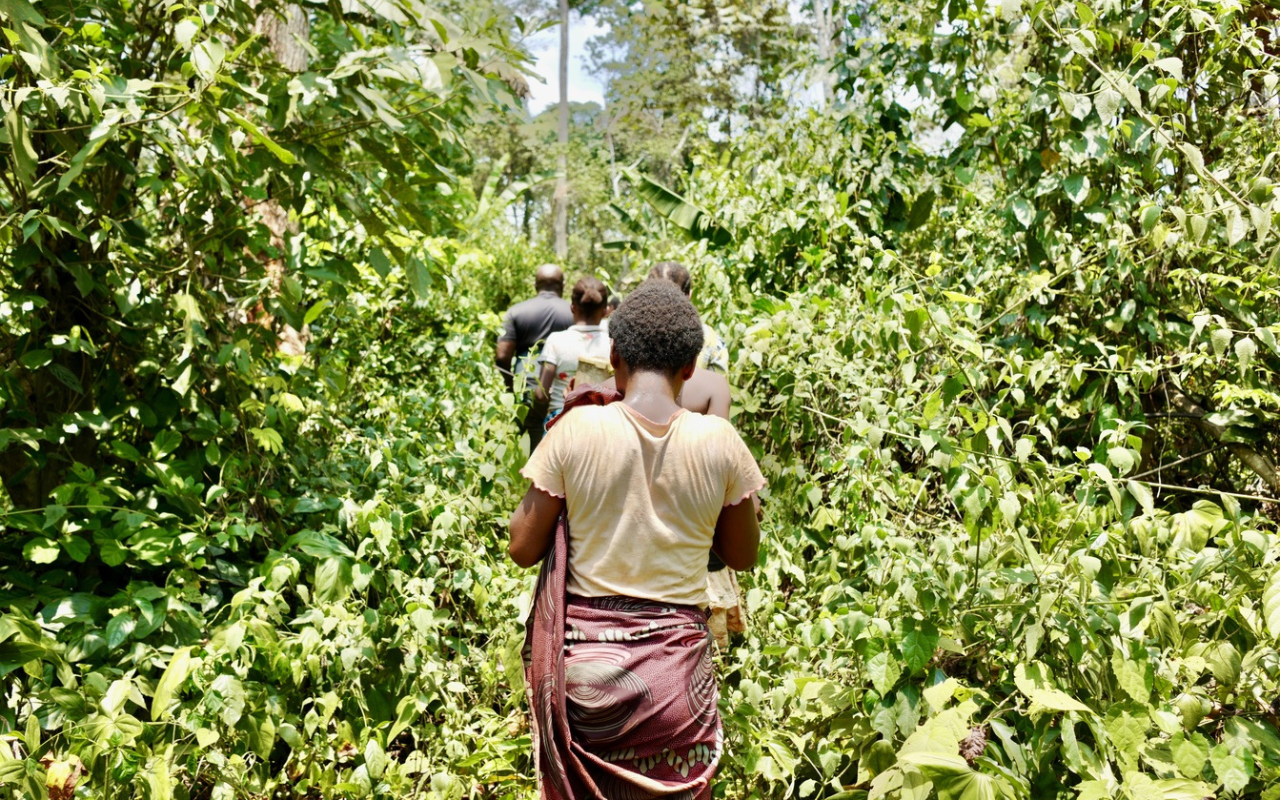
Women farmers from Germany and Uganda have come together in Mecklenburg-Western Pomerania to discuss the co-creation of women in agriculture. © GIZ Claudia Jordan

By Deutsche Gesellschaft für Internationale Zusammenarbeit (GIZ)

GIZ is a globally active provider of international cooperation for sustainable development. It has more than 50 years of experience in a wide range of fields.

All contributions

“Is the radio for the goats or the people?” Florence Katwere from western Uganda asked curiously. A ripple of laughter spread through the group of Ugandan farmers and German LandFrauen who had gathered for an excursion to German farms in Mecklenburg-Vorpommern. At the milking parlor of the "LBG Glasiner Gold" goat farm near Wismar, the visitors were amazed: the facility milks 1,600 goats in just under four hours. Farm owner Sidonie Beltman, demonstrating the milking hoses to the women, glanced at the radio mounted on the wall. "The radio is mostly for the people," she said with a smile. "But who knows? Maybe the music motivates the goats a bit too."


During this exchange, Ugandan farmers are trained in Germany on organizational development, advocacy, and leadership. The training includes field trips to agricultural enterprises alongside local LandFrauen. The project is organized by dlv-LandFrauen gGmbH, supported by the Deutsche Gesellschaft für Internationale Zusammenarbeit (GIZ) GmbH and the Federal Ministry for Economic Cooperation and Development (BMZ).


Ich bin ein Alternativtext
Sidonie Beltman explains the care of her animals in her goat shed. © Claudia Jordan/GIZ

“It’s interesting to look beyond the horizon with colleagues,” said Dr. Heike Müller, Chairwoman of the LandFrauen Association Mecklenburg-Vorpommern, who accompanied the Ugandan women on the excursion day. “We all live on the same planet and are interested in the impacts of our actions on the Global South.” She had already been invited multiple times today by the Ugandan farmers to visit their homeland. As a token of gratitude, they presented her and others with scarves in Uganda's national colors. A pair of colorful flip-flops from Uganda also found a new owner on the goat farm. The exchange with the Ugandan guests was warm and uncomplicated, Müller said. “From one farmer to another, you always find common ground,” said the 59-year-old farmer from Malchin.


Many women lost their agricultural jobs after reunification

Müller and her husband had about 150 cows until 2023. She started her career at an agricultural production cooperative (LPG), the type of collective farm mandated in the DDR. She explained to the Ugandan women what reunification meant for farmers in Mecklenburg-Vorpommern with some figures: about 1,000 LPGs were transformed into 4,000 farms after the fall of the Berlin Wall. Some employees bought land from the LPGs and leased additional plots. Many women lost their jobs on these farms; some moved west. To stand up for women’s rights and strengthen cohesion, the LandFrauen Association Mecklenburg-Vorpommern was founded in 1991. Today, the association has 1,000 members. Nationwide, the German LandFrauen Association (dlv), which celebrated its 75th anniversary last year, has 450,000 members.
 

Ich bin ein Alternativtext
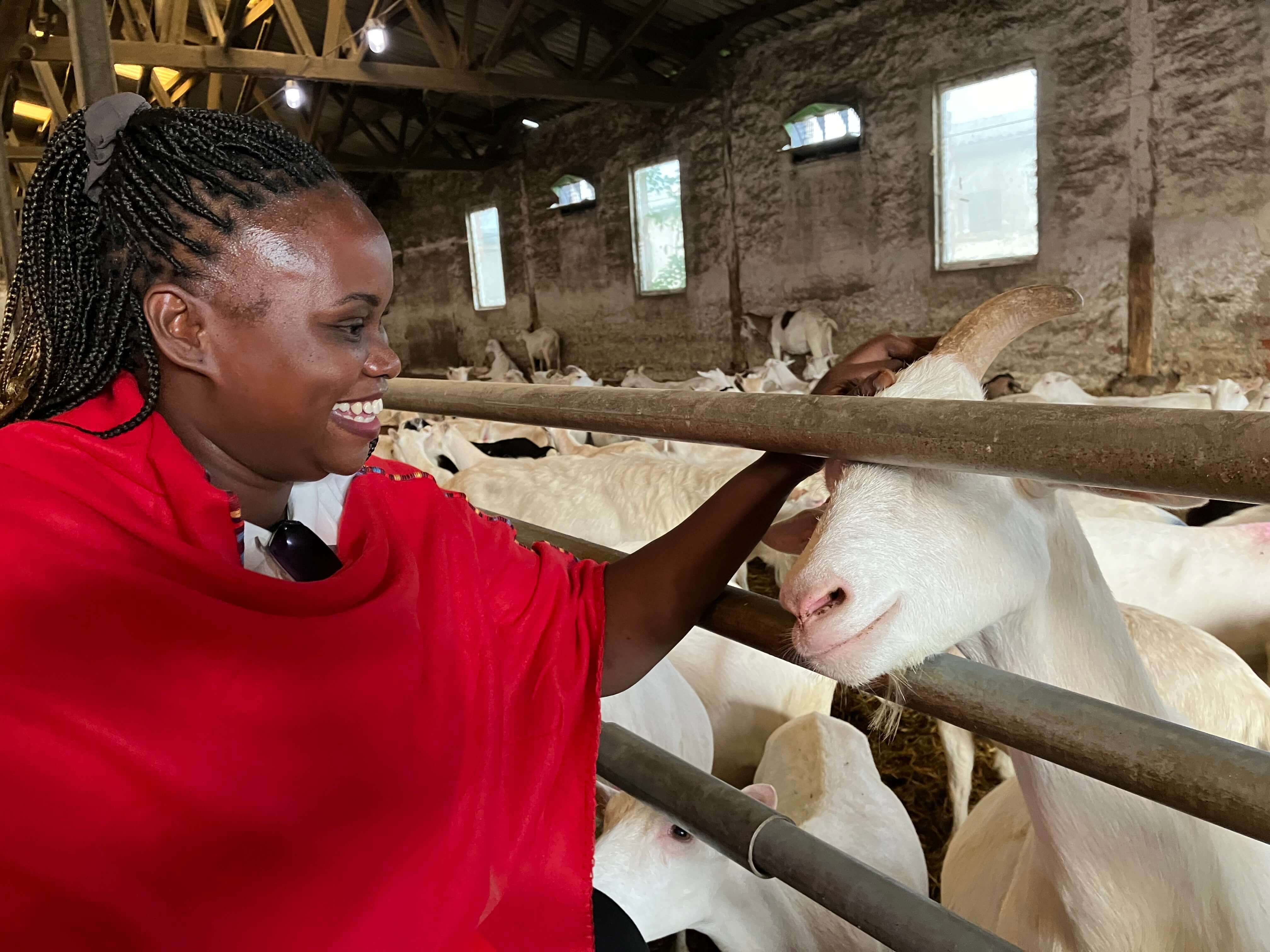
Farmer Rehemah Nasejje from Central Uganda examines one of the goats. © Claudia Jordan/GIZ

In addition to their project work, such as an EU-funded nutrition program for primary and special schools to raise awareness about healthy eating, the LandFrauen also showcased their culinary skills during the meeting, preparing regional fish specialties like herring and shrimp. They also sewed bright red ponchos with the LandFrauen bee symbol embroidered on them for their guests. The LandFrauen of Mecklenburg-Vorpommern also maintain traditions such as crafting grain crowns from the last remnants of the wheat harvest, which they present annually to the state chancellery in Schwerin. The LandFrauen believe that women should become more visible and vocal in politics. With initiatives like the "Municipal Action Program – Women into Politics!", they aim to increase women’s participation in local politics. This is also a pressing issue for the Ugandan farmers.


“In Uganda, women work in agriculture, but men make the decisions. We need more advocacy for women. We want women to speak and the government to listen,”

said Stella Nabbumba, a farmer from central Uganda.


Involving the men

Due to the older age structure of the LandFrauen in Mecklenburg-Vorpommern, 50 of them have formed the Young LandFrauen group. One member is Sidonie Beltman, the goat farm owner. “It’s great to have the LandFrauen network here in the countryside,” she said. Standing in the goat barn among her animals, she had to keep pushing the goats away during her English explanations to prevent them from nibbling her constantly. Amid the white German dairy goats, a few larger, brown-hued male goats with impressive horns roamed about. “Reproduction here happens naturally,” Beltman explained. “Our South African Boer goats are much smaller,” noted Florence Katwere as she stroked the head of an especially curious goat. The Ugandan visitors were particularly impressed to learn that goat milk was used to make cheese and ice cream. “It’s amazing how farmers here utilize every part of their production,” said Harriet Achola, a 34-year-old smallholder farmer from Amrun in northern Uganda. The women didn’t have to wait long for a taste test. They could choose between strawberry, hazelnut, or lavender ice cream.


“It’s fascinating to see how women in Germany are involved in agriculture and animal husbandry,” remarked Rehemah Nasejje. The 33-year-old farmer from Mukono in central Uganda raises chickens, the only form of livestock farming women in Uganda are typically involved in, she said. As the coordinator of the Ugandan Young Farmers Association (UNYFA) partnership with dlv under the project “Enhancing the Capacity of Young Women in Agri-Business (ECAWA),” Nasejje emphasized the challenges women face. Women work hard in agriculture but have little decision-making power. When they receive support, they often have to justify it at home and deal with conflicts. “We need to involve men in the process to make long-term progress for women,” she stressed.


A man is also part of the group – the coach Patrick Mpedzisi from Zimbabwe, who is accompanying the women on their study trip. For him, strong women in agriculture are normal, as he was raised by his grandmother, who practiced organic farming in his homelannd.


“I want to encourage the women in this training to be kind to themselves and to help each other. It’s important to build their self-confidence and determination so that they can grow both individually and collectively,”

Mpedzisi emphasized.


Community is also very important to the German LandFrauen. “There are always people to support you, to listen to you. It’s a wonderful community,” said Claudia Nielsen, Vice Chairwoman of the Mecklenburg-Vorpommern LandFrauen Association. The 54-year-old farmer knows how vital a strong network is in challenging times. After a serious car accident left her husband requiring care, she faced the demands of running a family farm with 200 cows. She doesn’t plan to pass the farm on to the next generation. “My son should do what he loves,” Nielsen said. “We were workaholics,” Heike Müller added. Her children now live in Jena, Leipzig, and Rostock, pursuing careers as environmental engineers or teachers.


Ich bin ein Alternativtext
Anthea Ndyamuhaki examines a plant at the Norddeutsche Pflanzenzucht (NPZ). © Claudia Jordan/GIZ

LandFrau Sabine Brauer explained to the Ugandan visitors how a family business can survive political upheavals for centuries during a visit to the Northern German Plant Breeding company (NPZ) on the Baltic Sea island of Poel. In 1897, farmer Hans Lembke began breeding winter rapeseed there. Under the GDR, the company was nationalized, and a second company was founded in Schleswig-Holstein to buy back the old firm after reunification. Today, the family-owned business employs 280 people and exports seeds to 43 countries, including Australia, Mongolia, Chile, and South Africa. The NPZ breeds winter and summer rapeseed, field beans, peas, and forage crops, optimizing them for new diseases and climate change. “I’m fascinated by how a business can endure across generations despite setbacks,” said Harriet Achola, the smallholder farmer from northern Uganda, during a tour of the breeding halls.


A life-changing experience

In her homeland, Achola coordinates a farmers’ association with around 3,000 members, training 2,000 women in agricultural practices and advocacy. She felt empowered by the LandFrauen. “Women can’t do much? Women have so much strength and can fulfill many roles,” she emphasized. “Age doesn’t matter. Many LandFrauen are over 50, but they’re still doing these amazing things.”


Anthea Ndyamuhaki from Kanungu in western Uganda also gained significant insights from her trip to Germany. “This study tour has been a life-changing experience for me. Through an organization like the German LandFrauen, I see the growth of unity and collaboration, enabling them to achieve great things together,” Ndyamuhaki said. The 27-year-old young farmer recently acquired 400 hectares of land for her coffee plantation. “This training has ignited something in me. I want to do something big and do it well – just like the LandFrauen do here.” Her dream is to provide training for young people, women, and men in agriculture. “They should reflect on themselves, find their purpose, and remember the values their parents taught them.”


Similar articles

Two farmers attentively inspect rice plants in a lush, green field, showcasing agricultural dedication.

The price isn’t everything

By Bettina Rühl

In Togo’s capital, Lomé, home-grown rice costs almost twice as much as the imported product from Thailand. Yet there are good reasons for preferring the local product

Read more

A group of people walk through a lush field with tools, while a person is seated on a Powertrac tractor nearby.

"We are not Uber for tractors"

Interview with Jehiel Oliver

Jehiel Oliver was a successful consultant. One day, he quit his job in investment banking to become a social entrepreneur. His mission: tractors for Africa. Rental tractors. What gave him that idea? Find out in his interview with Jan Rübel.

Read more

A diverse group attentively listens to two men explaining equipment at an event in Burkina Faso.

The farmes themselves are the benchmark

A contribution by Andreas Quiring

Strong farmes are the key to a self-determined, sustainable development. Social innovations can help make the farmers’ actual needs the benchmark.

Read more

A group of women, some wearing green "d.light" shirts, gather for a photo in a well-lit room.

How the self-help approach empowers smallholder women

A report by INEF and Kindernothilfe

Supporting groups of smallholding women substantially contributes to strengthen rural operations economically. The organisation and associated group activities can help to reduce extreme poverty and improve the food situation.

Read more

(c) Christoph Pueschner/Zeitenspiegel
Somalia / Mogadischu, Juli 2011: diese Frau floh mit ihren Kindern aus dem 250 Kilometer entfernten Baidoa in das IDP-Camp Al-Hidaaya. © Christoph Püschner/Zeitenspiegel

Global responsibility: Tackling hunger is the only way forward
A contribution by Lisa Hücking (WHH)

Chancellor Merkel has begun an ambitious European political programme: Striving for compromise in budget negotiations, an orderly Brexit as well as an appropriate response to the corona crisis. Unfortunately, one of her positions that she previously held is nowhere to be found: Africa's prosperity is in the interest of Europe. 

Read more

A smiling woman in a vibrant blue patterned outfit stands confidently holding documents, with a group gathered in the background.

“They said: You can do it”

A contribution by Bread for the World

As President of the IABM cooperative in Muhanga, Alphonsine Mukankusi is not simply focused on the figures. She has learned how to deal with people and how to take on responsibility. At the same time, her work helps her to come to terms with the past


Read more

Farmers work together weeding a lush green maize field under a clear blue sky.

How Smallholders became Commodity Suppliers

Small farmers are often left behind in African agriculture. Access to markets and improved competitiveness can only be achieved if the small farms join forces. But those affected in partner countries are often at a loss as to how to implement cooperative models. Here, the BMZ provides support through the SEWOH ONE World – NO Hunger initiative and the Social Structure Promotion (Sozialstrukturförderung).

A project by Deutscher Genossenschafts- und Raiffeisenverband e. V.

Read more

Two people wearing conical hats are working in a lush green rice field, engaging in a focused discussion.

'The Doors are Open - We Farmers are Ready'

An Interview with Shamika Mone (INOFO) and Elizabeth Nsimadala (EAFF)

At the UN Food Systems Summit, farmers organizations have been represented on the international stage for the first time ever. Two representatives talk about bridging personal aspirations with the representation of regional needs and international negotiations.

Read more

Participants in a conference raise their hands to engage in a discussion on shaping food systems.

‘Invite yourself’ – Farmers organisations as key stakeholders of food systems

A Contribution by Andreas-Hermes-Akademie

The Andreas Hermes Academy (AHA) discusses the transformation of food systems with 30 representatives of farmers organisations.

Read more

Golden hay bales rest on a sunlit stubble field under a clear blue sky, evoking a tranquil rural landscape.

How farmers are facing the crisis

A contribution by GIZ

Russia's war against Ukraine and its impact on food, energy and fertiliser prices is worrying farmers all over the world. Young farmers, farmer organisations and politicians from Kenya, Chad and Ukraine tell their stories and what keeps them in agriculture.


Read more

An aerial view of a rural village showcases a network of dirt roads winding through houses and greenery.

“We have to focus on sustainability”

An interview with Karen Mapusua

Karen Mapusua, President of IFOAM Organics International Network, on the danger of the current fuel crises and inflation to loose track in sustainablity, why organic farmers should be heard and how the word “crisis” has a very different meaning where she lives in Fiji.

Read more

A man in a suit speaks at a podium under a colorful tent during a Farmers Day event.

Governor's Day with Farmers – For more discussion with local actors

A contribution by William Onura and Larissa Stiem-Bhatia

In agriculture it is important to include political stakeholders in the discourse. To build the bridge between practical application and political action, the think tank TMG launched the Governor's Day with Farmers in Kakamega County, Kenya. Now it took place for the second time. But what are the goals and benefits of the Governor's Day?

Read more

A woman in a colorful dress and hat works with a hoe in a vast, barren field under a cloudy sky.

Farmers' organizations want to be involved in designing agricultural policy

An interview with Kolyang Palebele

Four interviews kick off the relaunch under the new name „Food4Transformation“, asking the same questions from different perspectives. "Women and young people need access to land. And they need financial support to cultivate this land." - says Kolyang Palebele, President of the Pan African Farmers Organisation (PAFO).

Read more

A man waters crops in a sunlit field using a green watering can, promoting sustainable agriculture practices.

Strengthening the market linkages of smallholders in the face of global supply shocks

A Contribution by Niladri Sekhar Bagchi

The consequences of the Russian invasion of Ukraine have enabled many countries to open up new export markets for their agricultural goods. However, smallholder farms have been largely left out. Drawing on his experience in India, our author gives a brief overview of how this can be changed.

Read more

Vibrant Abidjan market scene with vendors balancing colorful fruits on their heads, creating a lively atmosphere. | © GIZ Toni-Kaatz-Dubberke

Young farmers as custodians of transformation

An Interview with William Madudike

How can rural economies become viable and modern? William Madudike, youth representative of the Zimbabwe Farmers Union (ZFU) and a potato farmer himself, examines this question. He argues that the whole rural economy and actors from producers to consumers need to be considered. An interview on the initiative role of youth.

Read more

A woman in a blue headscarf carries freshly harvested onions in a vibrant field, showcasing sustainable solar irrigation.

Learning from Each Other

An Interview with Dr. Jacqueline Mkindi

Partnerships are needed to face the multiple shocks for food systems. This is what Dr. Jacqueline Mkindi, president of the Agriculture Council Tanzania (ACT) and CEO of the Tanzanian Horticulture Association (TAHA) states.

Read more

A woman in a pink headscarf and floral dress stands confidently in a lush garden. | © Claudia Jordan

Stick together and learn from each other

By Claudia Jordan

During the Women Leadership Programme in May 2024, around 20 women from African countries and Germany met again for a one-week workshop in Bavaria, Germany to become fit for leadership in their organisations. One topic that concerns the women across countries is climate change, but also violence against women and their discrimination in agriculture.

Read more

A person in a yellow shirt holds a tray of eggs, smiling inside a chicken coop filled with hens.

Cultivating tomorrow

A Contribution by GIZ

Africa’s largest youth generation has the potential to transform agriculture sustainably. Young entrepreneurs like Febelsa in Mozambique are building agricultural businesses that fuel local growth.

Read more

A woman in a red headscarf observes young plants growing in a greenhouse, tending to them carefully.

Uprooting the Norm

A Contribution by GIZ

As a passionate social scientist and entrepreneur from Malawi, Ngabaghila Chatata knows that she can overcome any challenge. Her story stands out in a country faced with high unemployment, particularly in its rural areas. As the managing director of Thanthwe Farms, she has set out to inspire the next generation of young agripreneurs – proving that successful business starts with the right mindset, not only capital.


Read more

A woman sorts cocoa beans in a wooden tray, wearing a colorful floral shirt and traditional patterned skirt.

"We didn't even make it halfway"

Interview with Claudia Brück and Torben Erbrath

The demand for fair-trade cocoa is growing – but how is the industry responding? In an interview, Claudia Brück, Executive Board Member of Fairtrade Germany, and Dr. Torben Erbrath, Managing Director of the Federal Association of the German Confectionery Industry, discuss progress as well as challenges, and why real change can only be achieved through long-term commitment along the entire supply chain.

Read more

Three people, including one in a wheelchair, move along a concrete floor, symbolizing inclusion in agrichains.

“We will be more in ten years' time”

A Conversation with Pratima Gurung

Pratima Gurung has been advocating for the rights of Indigenous women with disabilities for years – in Nepal, across Asia, and globally. In this interview, she discusses progress, ongoing challenges, and why inclusion is a global issue that concerns us all. Her message: political spaces must be inclusive and intersectional.

Read more

The white paper cover on a green gradient background discusses financing agrifood systems for sustainable development.

Financing Agrifood Systems for People, Planet and Prosperity

A Contribution by Global Donor Platform for Rural Development

The Global Donor Platform for Rural Development has recently published a new White Paper titled “Financing Agrifood Systems for People, Planet and Prosperity.” It outlines a practical agenda to unlock the capital, partnerships, and innovation required to drive change at scale.

Read more

A man wearing traditional attire and a purple hat stands outdoors in front of trees and a building.

"We have high expectations of the Kampala Declaration"

An Interview with Lawani Arouna

The rural population and vulnerable groups should be involved in the implementation of the African Union's Kampala Declaration on the transformation of agricultural and food systems. This is the demand of sociologist Lawani Arouna, Vice President of the Regional umbrella organisation of farmers' associations in West Africa (ROPPA).

Read more

A group of women stands smiling on a lawn in Herrsching am Ammersee, surrounded by lush greenery and a building.

"We want to change the narrative of rural women"

A Contribution by GIZ

Development cooperation doesn't resonate in Germany? The Bavarian rural women have a different story to tell. A visit to a training session with female smallholder farmers from Kenya, Zambia and Uganda in Bavarian Herrsching am Ammersee.

Read more

Text highlights the potential of 71 million young people to enhance rural areas, with footprints symbolizing progress.

Answers from the youth: "Leave or stay? That depends on it!"

GIZ study; conducted by Geopoll

Does Africa's youth want to live in the city or in the country? Which career path seems particularly attractive? And how optimistic are the young people about the future? Young adults from rural areas answered these questions by SMS.

Read more

A group of people work together in a lush vegetable field under a clear blue sky.

"Agriculture can become a job engine"

Interview with Reiner Klingholz

How can agriculture modernise Africa? And does the road to the cities really lead out of poverty? Dr. Reiner Klingholz from the Berlin Institute for Population and Development in conversation with Jan Rübel .

Read more

Two women in vibrant traditional attire walk joyfully down a street, surrounded by smiling children.

Enough of being poor

By Marcellin Boguy

In western Africa a new middle class is emerging. Their consumer behaviour is determining the demand for products – home-produced and imported goods, on the internet or at the village market. The people of Ivory Coast in particular are looking to the future with optimism.

Read more

A person in a suit speaks into a microphone, holding papers, with an attentive audience in the background at a Rural Future Lab event.

The Big Bang is possible

Interview with Joachim von Braun

Happy youngsters in rural areas, green development and the connection to the digital age – professor Joachim von Braun believes in this future sceneraio for Africa. For three decades the agricultural scienties has been researching how politics can create prosperty on the continent. 

Read more

Teilnehmer einer Schulung im Digital Transformation Center Kigali, Ruanda. © Mali Lazell, GIZ

Africa's rapid economic transformation

A report by T. S. Jayne, A. Adelaja and R. Mkandawire

Thirty years ago, Africa was synonymous with war, famine and poverty. That narrative is clearly outdated. African living standards are rising remarkably fast. Our authors are convinced that improving education and entrepreneurship will ensure irreversible progress in the region even as it confronts COVID-19.

Read more

A person with curly hair is partially obscured by a large play button icon, suggesting a video is ready to be played.

Video: 4 Questions to Claudia Makdristo

A video clip by Seedstars

Startups are booming in African agriculture. What are the current trend and challenges – and can other regions benefit from innovative approaches? A Video-Interview with Claudia Makadristo, Regional Manager of Seedstars  

Read more

A smiling woman in a green shirt uses her phone while standing in a cornfield.

An opportunity for the continent

A contribution by the Bill & Melinda Gates Foundation

Africa’s population is young and ready to take its destiny into its own hands. Agriculture offers amazing opportunities in this regard. The Bill & Melinda Gates Foundation wants to support the next generation in this way.

Read more

Farmers work together threshing rice in a field with a makeshift machine under the clear sky.

Leveraging investment impacts

A contribution by Heike Baumüller, Christine Husmann, Julia Machovsky-Smid, Oliver Kirui, Justice Tambo

Any initiative whose aim is to reduce poverty in Africa should focus first on agriculture. But what kind of investment has the greatest impact? The use of scientific criteria provides some answers.

Read more

Vibrant scene in Abidjan market with vendors balancing colorful fruits and vegetables on trays amid bustling crowds.
Food market in Abidjan. © GIZ

Reference values: A building block on the road to social equality

A contribution by Friederieke Martin (GIZ)

A quick and cost-effective method calculates living wages and incomes for many different countries. The GIZ together with Fairtrade International and Richard and Martha Anker have developed a tool that companies can use to easily analyse income and wage gaps.

Read more

A gloved hand carefully inspects rows of neatly arranged chocolate bars on a production line.

From start to finish: a vision of interconnectivity

A contribution by Tanja Reith

At the moment, the agricultural industries of African countries exist in relative isolation. Imagine peasant farmers digitally connected to the value chains of the global food industry. How could this happen? A guidebook.

Read more

A speech bubble asks about taking over a farm, featuring emojis of a chick, potato, cow, rice bowl, and tractor.

The Life of Their Dreams - What Children Want

Interview with Gnininkaboka Dabiré and Innocent Somé

Later on you want to become a farmer yourself, or would you prefer to take up another profession? Two young people from Burkina-Faso talked to representatives of the Dreyer Foundation about their parents' farms, the profession of farmer and their own plans for the future.

Read more

People gather around a bowl holding a package of soy powder, discussing the product information on labels.

"Soy can be made into more than just flour"

A report by Johanna Steinkühler (GIZ)

The soybean is a natural crop that can be used to make a lot of food. So, Tata Bi started a small processing business first on her own, then with a few other women, which provides the women with an additional source of income year-round besides selling the soybeans.

Read more

A smiling woman wearing a colorful headscarf stands in a sunlit field, exuding joy and confidence.

Africa's face of agriculture is female

A contribution by Beatrice Gakuba (AWAN-AFRIKA)

Africa has a huge opportunity to make agriculture its economic driver. However, the potential for this is far from being made exhaustive use of, one reason being that women face considerable difficulties in their economic activities. The organisation AWAN Afrika seeks to change this state of affairs.

Read more

A man with a rifle stands before a crowd holding pots, illustrating a tense situation at a distribution point.

"Without peace, there will be no development"

Interview with Karina Mroß (DIE)

What contribution does development cooperation make to conflict prevention? What can it do for sustainable peace? Political scientist Karina Mroß talks to Raphael Thelen about post-conflict societies and their chances for peaceful development.

Read more

A person speaks passionately at a podium during a presentation at the Ministry for Economic Cooperation and Development.

The communicator

A contribution by Jan Rübel

What do electrical engineering, telecommunications and agriculture have in common? They arouse the passion of Strive Masiyiwa: Thirty years ago, he started an electrical installation company with $75, later riding the telecommunications wave as a pioneer. Today he is committed to transforming African agriculture.

Read more

A man in a suit gestures expressively during a conversation, with green plants in the background.

Spiritual mortar for the young generation

A contribution by Jan Rübel

Fred Swaniker is working building a new era of leaders. And what about agriculture? ‘It needs to be more sexy!’

Read more

A pile of raw cashew nuts with one split open to reveal the creamy interior, highlighting their natural texture.

The 'Grey Gold'

A contribution by Maria Schmidt (GIZ)

The Cashew Council is the first international organisation for a raw material stemming from Africa. The industry promises to make progress in processing and refining cashew nuts - and answers to climate change

Read more

A man conducts a workshop, engaging an attentive group seated in a classroom setting.

A new attempt at Africa's industrialization?

A contribution by Helmut Asche

Afrika is about ready. There are promising approaches for a sustainable industrialization. However, the path poses challenges to the continent.

Read more

A worker in a yellow shirt tends to a lush palm oil plantation, surrounded by tall trees under a bright sky.

No rainforest for our consumption

A contribution by Jenny Walther-Thoß (WWF)

In the tropics rainforests are still being felled for the production of palm oil, meat and furniture. It is high time to act. Proposals are on the table.

Read more

In Haute Matsiatra, two fish farmers work with nets in a rice paddy, while another sits on a rock overlooking the fields.

Sustainable Artisanal Fisheries and Aquaculture in Rural Areas

Fish is important for combating malnutrition and undernourishment. But it is not only notable for its nutritional value, but also secures the livelihoods and employment for 600 million people worldwide.

A Project of GIZ

Read more

A person in a denim jacket stands in a lush banana plantation, holding a bunch of green bananas.

Youth Employment in Rural Areas

The world’s population keeps on growing; with this rise comes an increased need for food as well as productive employment opportunities. Offering young people in rural areas better employment prospects is one of the objectives of the sector project. The young population is the key to a modern and efficient agricultural economy.

A project of GIZ

Read more

A farmer waters crops in a lush field, showcasing sustainable agricultural practices under clear blue skies.

Youth as key actors for a transformation of agri-food systems

Five Questions for Anke Oppermann

In October, the Committee on World Food Security (CFS) adopted policy recommendations ‘Promoting Youth Engagement and Employment in Agriculture and Food Systems’. Anke Oppermann answers five questions on youth employment in the agricultural sector.

Read more

A woman in glasses and a patterned coat gestures while engaging in conversation at a social gathering.

Priscilla Impraim and her chocolate business

A contribution by Jan Rübel

Priscilla Impraim is one of the first women in Ghana to enter the chocolate business. Despite some hurdles, she founded the company Ab Ovo Confectionery Limited in 2006 with currently six permanent employees and 25 seasonal employees.

Read more

A person in colorful clothing gathers fluffy cotton into a large sack under a clear blue sky.

Achieving more together – New forms of cooperation for sustainability in the cotton sector

A Contribution by Saskia Widenhorn

Saskia Widenhorn, Head of the Cotton Component in Cameroon and the Sub-Saharan Cotton Initiative at GIZ, reports on the Bremer Cotton Week, which brought together international industry experts. The agenda included supply chain transparency, sustainability and new forms of cooperation between the private sector and partner countries.


Read more

A woman in a vibrant pink dress tends to young rice plants in a lush, green paddy field.

Why organic is a „blessed” method

An Interview by Claudia Jordan

Three female entrepreneurs from Mozambique, Sri Lanka and Uganda tell their stories about starting organic businesses from scratch, now selling Baobab Oil, Gotukola powder and Shea butter in international markets. And they explain why their business is almost 100 percent female.

Read more

A group of people walks through a field in Tanzania, with vibrant sunflowers blooming under a clear sky.

Sang'alo Institute invests in farming of sunflower crop

A contribution by James Wanzala

Kenya is a large importer of vetable oils mainly from Indonesia and Malaysia - amongst them sunflower oil. Due to the Russian war of aggression against Ukraine, there were supply bottlenecks and food shortages, leading to less affordable vegetable oils in Kenya. As a response to the lack of supply, the Sanga'alo Institute of Science and Technology, took that impulse, teamed up with the GIZ and established regional cultivation and refinement of sunflowers.

Read more

Handmade signs advertising various services like electrician and hairdresser are attached to a tree trunk.

Mozambique: How informal workers find jobs through an app

A Contribution by Leonie March

There are only about 1 million jobs in the East African country. The majority of the population works in the informal sector, and it can be difficult for them to find customers. Biscate offers a digital solution - without the need for internet, data or smartphones.

Read more

A group of smiling young people sit outdoors, engaging in a lively activity with a wooden box.

Stepping into the future: How youth organisations are driving change

A contribution by Felix Chiyenda

Together they are stronger: In many African countries, young men and women are coming together to form youth organisations. These organisations help young people in rural areas to earn a living in the agricultural and food sector, creating prospects for the future in rural areas.

Read more

A group of people stands in line outdoors, waiting at a registration table under a tree.

The Principle of Sharing

A contribution by gebana

gebana, a Swiss fair trade company, follows the principle of "sharing" with its corporate philosophy: farming families in the Global South participate directly in the sales of their online shop. Caroline Schaar, Marketing at gebana, explains the company's approach.

Read more

A person tends to drying coffee beans on raised beds under a bright blue sky in a lush rural setting.

Improving The World, Sip by Sip

A Conversation with Maura Oerding

Maura Oerding has a mission: With the specialty coffee Angelique's Finest, she not only wants to enter new markets but also revolutionize the coffee industry. Her recipe for success? Empowering women from Rwanda and Uganda from cultivation to marketing. Oerding’s goal: quality, fairness, and self-determination in every bean.

Read more

A diverse group of women joyfully pose together on a rooftop, celebrating female leadership and empowerment.

Female Leadership: A Key Lever for Transformation?

A Conversation with Carmen Torres Ledezma & Oluwaseyi Kehinde-Peters

Female Leadership is vital to the transformation of agriculture and food systems. Therefore, it is so important to advance gender-sensitive approaches to increase the presence of women in leadership positions in agricultural production and to make these systems more equitable, sustainable and resilient.

Read more

A woman in a blue sari arranges white silk cocoons on a woven wall in a rural setting.

Gender-Transformative Approaches – Unlocking Everyone’s Potential

A Contribution by GIZ

Studies show that women often manage agricultural resources more effectively and sustainably. With equal access to production resources, agricultural yields could increase by up tp 30 per cent. But this is about more than just productivity. How can gender-transformative approaches (GTA) drive meaningful change and why are GTA key to sustainable change?

Read more

Illustrated icons highlight six collaborations aimed at creating fair and sustainable supply chains.

Stronger toghether: Six collaborations for fair agricultural supply chains

A Listicle by Yvonne Bielfeld

For everyone in the supply chain to benefit, it is essential that politics and business work together. The measurable successes of such partnerships are demonstrated by the following six projects: they show how cooperation with the business sector can make supply chains fairer, more resilient, and more sustainable step by step.

Read more

A woman smiles confidently inside her small shop, surrounded by various goods, symbolizing economic equality and care.

The Gap the Economy cannot afford

A Study by CARE

In a new study, the international humanitarian agency CARE analyses how the economic and social barriers faced by women significantly reduces the global gross domestic product (GDP). At the current rate, it will take 152 years to close the economic gap between women and men – although closing this gap would be extremely profitable from an economic perspective.

Read more

A man collects natural rubber from a tree, holding a container and tapping tool in a lush forest. | © GIZ

From the Tree to the Street: The Story of Natural Rubber

A Contribution by Carlos Castellanos & Yvonne Bielfeld

The shoe manufacturer Cueros Vélez as a good example of private sector responsibility: the photo gallery shows how the bark of the rubber tree becomes a reliable yet deforestation free companion on our roads.

Read more

A group of people walks through a dense, green forest path, surrounded by lush vegetation on a sunny day.

Feminist development policy – A new beginning?

An Interview by Journalist Jan Rübel

Cameroonian gender and peace activist Marthe Wandou on the role of women and girls in development policy – then and in the future.

Read more

A group of women in colorful clothing and headwraps gather outdoors, engaged in conversation near rustic buildings.

Small cup, big impact

A Contribution by UFULU and GIZ

A menstrual health pilot in Rural Malawi empowers rural women in Agribusiness through hygiene products and helps to improve working conditions in rural areas.

Read more

A large group of people pose together at the 2022 regional conference in Lusaka, Zambia, celebrating agricultural finance initiatives.

Digital participation in the agrofinance sector: rural development and women's inclusion

A Contribution by GIZ

Data security, financing, the automation of loans and the use of alternative data - the digitalisation of financial services in the agricultural sector has many facets, which an international conference with representatives of the agricultural finance sector in Zambia addressed. But how does the digitalisation of financial services contribute to rural development and the inclusion of women?

Read more

Women in colorful attire sift grains under a sunny sky, engaging in traditional agriculture. | © GIZ Joerg Boethling

What connects gender and the environment

Women can play a vital role in the change process both when it comes to climate protection and adapting to climate change. But the reality is often still not quite like this: women and girls are particularly badly affected by the climate crisis. Is the topic of gender getting enough attention at the upcoming climate conference? Questions for Bettina Jahn from UN Women Germany.

Read more

A group of men wearing masks engage in a fruit preparation activity, emphasizing that nutrition is not just a woman's concern.

Nutrition is not just a women’s issue

A contribution by GIZ

When women have control over the resources of a household and manage the income, it usually leads to a more balanced and healthier diet for the family. But often the decision-making power lies with the men. How can this gender inequality be addressed? The GIZ global project Food Security and Resilience provides insights into project work on gender-transformative approaches finances by the Federal Ministry for Economic Cooperation and Development (BMZ).

Read more

Aerial view of a Madagascar landscape showing a patchwork of fields and a dirt road dividing dry and green areas.

Towards Climate Justice: Securing Women’s Land Rights for a Resilient Tomorrow

A Contribution by TMG

In the midst of global climate discussions, a resounding call emerges: Women's land rights must be the cornerstone of our climate actions. They're not just pieces of the puzzle; they form the foundation for true climate resilience. TMG Think Tank for Sustainability reports from the first African Climate Summit.

Read more

A woman in a pink shawl waters young plants in a garden, promoting sustainable agriculture. | © GIZ Climax Film Production

Gender Justice – a Precondition for Resilience

A contribution by IFPRI

Women and girls in poorer countries are affected in particular ways by the multiple crises the world is currently facing. Uncovering the linkages between gender, resilience and food security, experts from International Food Policy Research Institute (IFPRI) look at ways to support women and girls’ capacity to respond to crises.

Read more

A smiling woman in a green shawl raises her hand enthusiastically during a conference meeting.

Shu Wen Ng, the Clear-Sighted

An Interview with Shu Wen Ng

Shu Wen Ng is a health economist. She knows what is best suited to go on a plate. But how can this be achieved on a mass scale in countries with lower incomes? "The solutions to gett there already exist," she says, "but what is often missing is courageous leadership to implement them."

Read more

A woman in a patterned outfit harvests bananas in a lush field, surrounded by tall green plants.

Against all Odds

A Contribution by Claudia Huber

Rose Okello is a Matoke farmer and single mother living in a village near Mbarara, a town in southern Uganda. To ensure that she can pay for her family's food, her children's school fees and other expenses on time, Rose uses various financial services. Her story portrays hurdles but also hope for women in agribusiness.

Read more

Five women in colorful attire proudly display their land titles in Madagascar, celebrating empowerment and ownership.

Towards more equitable rural realities

A Contribution by GIZ

In the #HerLand campaign for COP16, the UNCCD is focusing on women as key players in conserving soils and combating drought. The Deutsche Gesellschaft für Internationale Zusammenarbeit (GIZ) has also contributed to the campaign focusing on securing women's land rights.

Read more

A smiling woman in a polka dot dress holds a baby, embodying change and joy in a lush outdoor setting.

Women as Change Agents

A conversation with Caroline Kayanja, Dr. Eileen Nchanji, & Theresa Herbold

A transformation of agricultural and food systems is not possible without overcoming structural gender inequalities. In this discussion, Caroline Kayanja (UCOBAC), Dr Eileen Nchanji (CIAT) and Theresa Herbold (Ministry of Development) reflect on the key challenges and solutions – from land access and representation to women-led collectives and innovative technologies.

Read more